
 简体中文
简体中文 English
 عربى
عربى



The request came in from a buyer of polyester fleece who had one complaint: the fabric was too "plastic" to touch. It had passed all the strength and colour tests, but when a hand brushed across its face, the slick, synthetic feel killed the whole application. The order found its way to a finishing plant with a sueding machine, and within a working shift, the surface had changed dramatically. A dense, short, silky pile was raised. The fabric no longer felt like film; it felt like peach skin. The construction had not changed, the fibre content had not changed, and the only variable that mattered was controlled surface abrasion.
Sueding machines are not optional accessories in modern textile processing. They are the equipment that decides how a fabric finally feels to a consumer, whether the product is a garment, upholstery, footwear, automotive interior, or a technical wiping cloth. A sueding machine, also called a sanding or brushing machine in different regions, works by running fabric over rapidly rotating emery-covered rollers or abrasive fibre brushes. The result is a fine nap on the surface, improved softness, better dyeing appearance, and a more premium hand feel.
For finishing managers, process engineers, and factory owners, the problem is rarely whether sueding has value. The real questions are practical. Which type of machine suits a given fabric programme? What specification should be written into the purchasing decision? And how should the machine be operated to get repeatable results from the first batch to the thousandth batch? This article answers those questions directly, using the classifications, technical parameters, and working procedures that are actually used on an industrial finishing floor.
Why Sueding Machines Exist: The Functional Purpose of the Process
Sueding is often classified as a dry finishing process, which is correct but incomplete. The process physically lifts and frays fibres from the surface of a woven, knitted, or nonwoven fabric. In doing so, it produces a surface with a short, dense pile, similar to the brushed underside of natural suede leather. This gives the textile a softer touch, reduces its surface gloss, and improves its thermal insulation against the skin. At the technical level, sueding also changes how the fabric performs in subsequent processes: it increases surface area, improves coating adhesion in some applications, and opens the capillary structure that helps moisture management fabrics feel less clammy.
The process is most frequently applied to cotton, regenerated cellulose, and polyester fabrics, as well as to blends of these fibres. It is used on both knitted and woven constructions, from lightweight single jersey to heavy twills, moleskins, denim, and luxury wool blends. The word "suede" in the machine's name creates a tendency to think of fashion textiles only, but significant volumes of sueded fabric go into industrial workwear, automotive seat cloth, filtration media, cleaning cloths, and synthetic leather base fabrics.
Understanding why sueding is done changes how a machine is selected. If a mill processes high-tenacity polyester for automotive applications, the target is a uniform, low pile with controlled surface drag. If a knitwear dyer processes cotton jersey, the goal is a soft, peach-like feel without weakening the loop structure. The machine must be chosen around the fabric's construction, the fibre's response to abrasion, and the customer's hand-feel standard. A single universal machine type rarely serves all of these duties at a satisfactory level.
Working Principle of a Sueding Machine
Every sueding machine follows the same fundamental principle. Fabric is fed through a series of rotating abrasive rollers, while the machine controls the contact between the fabric and the roller surface. Friction, not cutting, generates the suede effect. Individual fibres protruding from the yarn surface are caught by the abrasive points of the roller, pulled upward, and polished or fractured into a fine pile. The normal yarn structure itself remains intact because the fibre-to-abrasive contact is carefully balanced.
Three elements determine what happens in the contact zone. The first is the speed difference between the fabric and the abrasive roller surface. The second is the pressure of the roller against the fabric, usually expressed in textile practice as a contact arc or "grinding pressure" setting. The third is the abrasive character of the roller surface itself. The timing of the contact also matters. In most machines, fabric passes not over one roller but through a train of rollers, which creates a gradual building of pile depth. Commercial machines sold by established builders, including the models produced under the HUAYI brand by Jiangsu Huayi Machinery, commonly use combinations of multiple rollers precisely so that the abrasive action progresses slowly rather than tearing the material in one pass.
One feature distinguishes sueding from brushing. A brushing machine tends to lay down and align fibres, whereas a sueding machine actively breaks and abrades the surface. That is why sueding can be used to correct visible filamentation on polyester fabrics, and why it produces a pile that remains after dyeing rather than simply combing loose fibre in one direction. Threading is equally important. The fabric is taken through a defined path around the rollers with the face side against the abrasive medium. Some machines are arranged vertically along a curved frame; others are horizontal, and others place smaller abrasive roller heads onto a planetary rotating support. Each arrangement produces different control over fabric tension and, therefore, a different effect.
Abrasive Medium: Emery, Carbon Fibre and Ceramic Fibre Rollers
The abrasive roller is the true tool of the sueding machine. The three most common types found in production are emery rollers, carbon fibre brush rollers, and ceramic fibre brush rollers.
Emery rollers are metal or composite tubes covered with abrasive grit, bonded much like industrial sandpaper. Their sharp, fixed abrasive points deliver accurate, consistent cutting, which is why emery is preferred when a short, velvet-like pile is required on woven cotton and polyester fabrics. The grit size is selected according to the fibre's denier and the depth of the desired nap. Fine emery paper is used on delicate knitwear; coarser grit is used on rigid fabrics or when the objective is to reduce weight and adjust drape. An emery roller can also be re-sleevved and re-bonded when its cutting efficiency drops.
Carbon fibre and ceramic fibre rollers are different in character. These brushes have thousands of straight or slightly curled filaments standing out from a central core. The filament tips contact the fabric, and when they rotate at speed, they act like flexible abrasive fingers. Carbon fibre brushes are well suited to knitted fabrics, where a rigid emery tool would quickly create holes or thin the construction. Ceramic fibre brushes provide a harder, more aggressive abrasion while retaining the individual filament action, and are often used when a dense, prominent nap must be raised on woven fabrics or on some types of napped terry and velvet goods. Because the filaments can bend and recover, brush rollers produce a different, usually loftier "suede" effect than a full emery roll.
An industrial machine is not obliged to contain a single type of roller. In combined machines, rollers can be fitted in a sequence of different tools, for example two emery rollers followed by two carbon fibre brushes, or a mix of fine and coarse emery sleeves. This flexibility is what makes the modern sueding machine suitable for a changing order book rather than for only one fabric in a single season.
Contact, Pressure and Speed Parameters
The parameters that a finishing operator can adjust on a typical sueding machine are fabric speed, roller speed, and abrasive pressure. Fabric speed is usually set between 6 and 30 m/min on combined production machines, with high-speed polyester systems now claiming substantially faster operation under controlled abrasive contact. Roller speed is managed either as a shared common speed or individually for each roller, allowing a "graduated" action from a lighter first roller to a stronger final roller. Direction is also a parameter: the rollers usually rotate opposite to the forward motion of the fabric, creating the relative velocity that produces abrasion.
Pressure is more difficult to express as a single parameter because it is realised through the wrap angle and the height of the roller relative to the fabric plane. On many machines, removing or adding a spacer behind the fabric or adjusting the bed raises or lowers pressure across the full operating width. What matters operationally is that pressure must remain identical across the fabric width. If the gap between roller and transport bed is 0.5 mm greater on the left side than on the right, the finished fabric will show a corresponding difference in pile depth between selvedges. Operators should check this alignment daily and record pressure settings per style.
Tension in the fabric web also has a direct effect. Low tension allows the abrasive roller to lift a deeper pile but increases the chance of chatter marks and widthwise oscillation. High tension presses the fabric into the abrasive more firmly, giving stronger abrasion but also a flatter, more compact surface. On a machine with multiple rollers, tension control must be assigned upstream and downstream of the abrasive section rather than left uncontrolled across it. The effect of parameter interaction is one reason why several news and technical articles on HUAYI's website, including those dealing with the working principle of sueding machines, emery rollers and fabric tension parameters, keep returning to the same point: settings must be evaluated on fabric, not on a control panel alone.
Main Types of Sueding Machines
There is no single official nomenclature for sueding machines, and this confuses many buyers. A high-speed model from one builder may not correspond to a model with the same description from another builder. However, the industrial fabric-finishing market has converged on practical categories based on mechanism geometry, roller arrangement, abrasive tool, and application. Understanding all four categories at once helps a buyer decode a specification sheet and compare different suppliers fairly.
Vertical Combined Sueding Machines
A vertical combined sueding machine arranges its abrasive rollers along a curved or upright frame, with the fabric path forming a shallow arc as it passes over the rollers. The typical configuration is a group of six to eight rollers arranged one after another over a central support, each rotating in the opposite direction from its neighbours. Fabric is threaded through in a continuous path, and the vertical layout gives the operator a direct view of each contact zone.
The vertical construction offers practical advantages. It occupies less floor area for a given number of rollers than a long horizontal machine; it keeps alignment stable during high-speed rotation; and the open frame simplifies cleaning, because fibre dust falls away from the machine rather than accumulating on horizontal surfaces under the rollers. Vertical combined machines are broadly specified as general-purpose equipment for woven and knitted fabrics, especially when a finishing mill must process a quick sequence of cotton, rayon, polyester, and blends on the same day.
HUAYI's vertical combined machine, the MM model, is a representative example in this category. It is used by textile finishers who need a repeatable sueding effect over a wide range of grammages and constructions. The machine's design is built around the "combined" concept, meaning it can carry more than one type of abrasive roller so the finishing recipe is not limited to a single tool.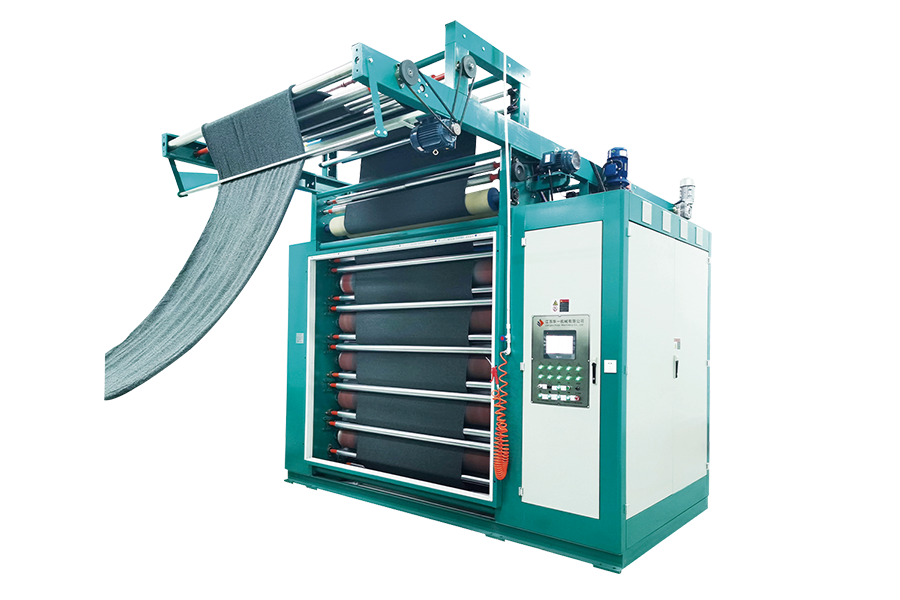 HUAYI MM-Model Vertical Combined Sueding MachineThis vertical combined sueding machine supports sandpaper, carbon fiber, and ceramic fiber abrasives for flexible finishing. It delivers consistent peaching effects across the fabric and enables single- or double-sided sanding on various woven and knitted materials.View Product → is offered for the fabric finisher whose order book spans light-to-medium wovens and heavier knits.
When specifying a vertical machine, pay attention to the maximum diameter of the abrasive rollers and the ease with which one roller can be removed and replaced. Vertical frames can feel cramped when a full roller change is required, so models with quick-release end caps and a maintenance track make a significant difference to downtime.
Horizontal Combined Sueding Machines
In the horizontal layout, rollers sit in a straight or inclined line and fabric passes horizontally above them. This arrangement is common in machines dedicated to heavy, wide, or dimensionally sensitive fabrics. Because the fabric runs flat, it is easier to maintain uniform tension across widths over 3 m, and the operator can observe selvage curling immediately. Horizontal models are widely specified for upholstery fabrics, heavy cotton twills, corduroy base goods, and denim, where the fabric's weight makes vertical threading awkward.
A horizontal combined machine often has a longer abrasive section for the same number of rollers as a vertical model. It can therefore be built with a larger contact area, which permits a higher production speed without losing the desired pile depth. The downside is a larger machine footprint and a horizontal surface that tends to collect fibre dust, so extraction systems are more important in this layout.
Finishers running denim programmes should look at the relationship between the horizontal machine and fabric shrinkage. Denim, especially after sanforizing, arrives with residual tension and a dense twill surface. The horizontal construction allows that fabric to be supported flat along the full width while the abrasive rollers lift a short, even nap. Huayi additionally supplies a purpose-designed horizontal sueding machine for denim in this product line, which reflects the industry's demand for reliable, repeatable production on heavyweight cotton goods.
For mills whose core production is denim and heavyweight woven, the MW horizontal combined model provides an appropriate technical platform.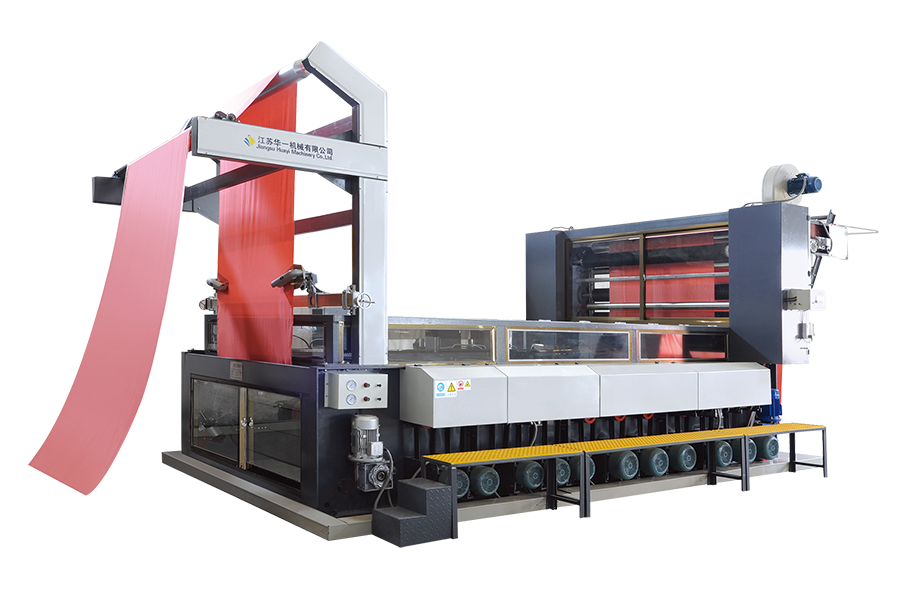 HUAYI MW-Model Horizontal Combined Sueding MachineThis horizontal combined sueding machine accommodates sandpaper, carbon fiber, and ceramic fiber rollers. Each roller has an independent frequency conversion drive, enabling precise tension control and uniform edge-to-edge sanding for wider and heavier fabrics.View Product → is specified with the same modular roller philosophy as the MM vertical machine but in a horizontal configuration optimised for wider and heavier fabrics.
Planetary Carbon and Ceramic Fibre Sueding Machines
The planetary sueding machine is the most specialised category in common production. Its abrasive heads are not fixed in a frame; they are arranged on a large rotating carrier, rather like planets moving around a central axis. Fabric passes through the centre of the system or along the carrier, and each individual roller turns on its own axis as the whole carrier rotates around the fabric. This dual rotation creates a much more intense yet localised abrasive action.
Planetary carbon/ceramic fibre machines are widely used for weft-knitted fabrics, where the objective is a high-quality peach-skin finish with minimal loss of bursting strength. Thanks to the planetary motion, the fabric surface is abraded in multiple directions. This breaks the monotony of a single-direction nap and produces a soft, round, "suede-like" feel. HUAYI has developed the X model for knitted fabrics and the Y model for woven fabrics within the planetary category. Both are used extensively on polyester microfibre and filament fabrics that require pore-like surface development before liquid silicone softening or anti-pilling finishes. The X and Y machines differ mainly in their tensioning system and fabric support, because woven construction tolerates a high, direct stress that knits would not survive.
The planetary mechanism brings speed and energy-intensity. It can produce in a single pass what a traditional vertical machine might need three passes to achieve. That makes planetary machines attractive for long runs and for products that would otherwise occupy a multi-roller vertical machine for too long. However, it requires more skill in setting because the abrasive energy combines carrier speed, roller speed, and fabric speed in one formula. For this reason, a factory entering planetary technology for the first time should ask the supplier for detailed documentation and operator training.
Dry Sueding and Wet Sueding Machines
Sueding is naturally a dry process, but the single most important innovation in the last generation of polyester sueding machines is wet-capable operation. Dry sueding is performed on moisture-free fabric. It is simple, low-cost, and standard for cotton and viscose. Wet sueding, by contrast, introduces water or an aqueous lubricant into the abrasive zone, either by spraying water onto the fabric or by circulating a liquid through a specially designed roller system.
Wet sueding is of greatest benefit on 100% polyester and high-content synthetic fabrics. Friction on dry polyester generates localised heat that can melt yarn tips, fuse filaments, and leave hard spots or "shining" areas on the fabric. Water in the contact zone removes that heat and prevents thermoplastic fibres from reaching their glass transition point. The result is a soft pile formed by physical abrasion, while the fibre remains intact and dyeable in subsequent processing. Wet sueding can also reduce the intensity of static electricity and helps to evacuate fibre dust before it contaminates the rollers.
The practical trade-off is resource consumption. Wet machines require a water supply, drainage, and treatment of the abrasive zone to avoid corrosion and bacterial growth. They also complicate parameter exchange between wet and dry jobs. A capable machine manufacturer solves this not by offering separate machines, but by providing dry-wet a machine able to run both modes with quick changeover. HUAYI's SMA382C series fits this description, having been developed for high-speed polyester sueding with a switchable dry-wet system.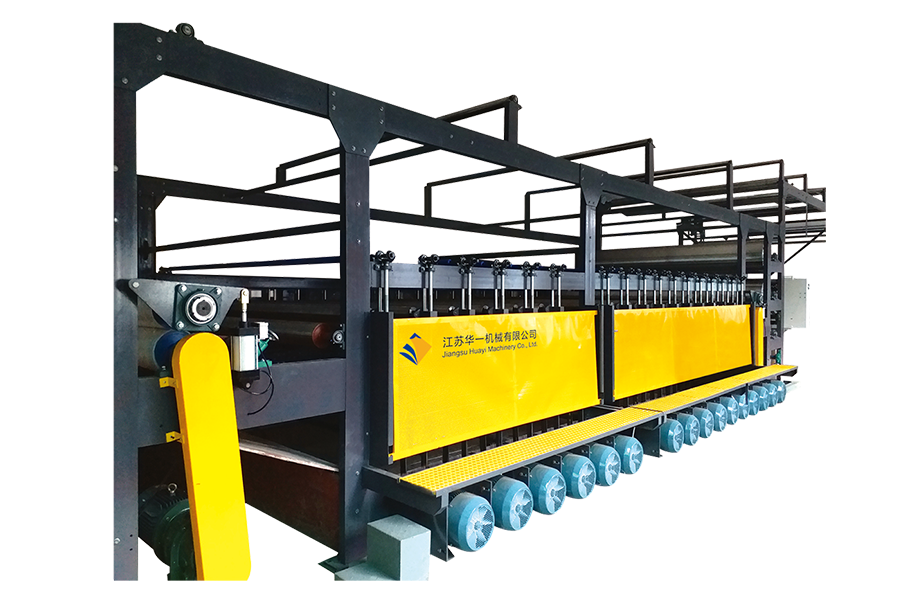 HUAYI SMA382C High-Speed Dry/Wet Sueding Machine for PolyesterDesigned for high-speed polyester sueding, this machine operates at 100–120 m/min and supports both wet and dry processes. It offers single- or double-sided sanding with flexible roller configurations, including 13 or 16 rollers, for various production needs.View Product → has found its market in plants that process woven synthetic and polyester-elastic fabrics requiring a controlled, fuzz-free sueded surface at high output.
Machine Types Distinguished by Application Fabric
Specification sheets often classify sueding machines by the fabric they were designed for, and this is usually the most useful classification for a production manager. The following groups appear across the industry.
- Knitted-fabric sueding machines. These machines use low-tension fabric transport and either carbon/ceramic fibre rollers with deep, flexible filaments or fine emery paper. They are designed to raise a soft pile on single jersey, interlock, fleece, and microfibre knits without creating holes or distorting the loop structure.
- Woven-fabric sueding machines. The abrasive setting is often harder, and the machine is equipped with more rigid tension control because woven fabrics resist deformation and tolerate higher roller pressure.
- Denim sueding machines. Horizontal or specialised flat-bed systems that deliver an even nap on the surface of indigo-dyed denim. They avoid edge rolls and maintain uniform action across stiff seam areas and varying weft densities.
- Moleskin and heavy cotton machines. Moleskin, a dense cotton fabric with a lustrous face, requires careful sueding to create its distinctive, silky "skin" without removing the natural strength of the base cloth. Specific machines or machine setups with fine emery plus very close tension control are provided for this kind of work, and HUAYI lists an industrial moleskin processing equipment page as a reference for customers producing that article.
- Polyester modern high-speed machines. Built with dry-wet capability, they process microfibre woven and knit fabrics for sportswear. They deliver a dense, superfine pile at far higher output than older generations.
- Synthetic leather and microfibre leather machines. The base fabric for synthetic leather must be sueded to give the artificial product a natural, non-plastic touch. Machines of this type use finer rollers, variable speed, and dust removal systems designed not to damage or tear the thin polyurethane or PVC layer.
- Leather grinding machines. Although not sueding machines in the textile sense, leather surface grinding uses similar abrasive roller technology to split and regularise the thickness and grain of natural leather. Factories that produce suede-like split leather usually need these machines in series with a dust extraction unit.
Core Machine Specifications to Compare
When comparing quotes from different machine builders, reliable comparison depends on the correct specifications. Many buyers focus on working width and number of rollers, but a sueding machine's production capability is determined by the combination of the following factors:
- Effective working width. The useful width of the abrasive roller. It should be wider than the fabric by 100 to 200 mm on each side, or at least enough to avoid uneven wear at the selvedge.
- Number and type of rollers. The count defines how much abrasion can occur in one pass. Six rollers are considered the entry point for a serious finishing department, with combined machines going to eight or more rollers. Roller type matters as much as count.
- Fabric speed range. Typical figures range from 5 to 30 m/min for multi-roller machines; high-speed polyester models may be advertised with rates above this, but always check the speed at which an acceptable surface is still achieved.
- Roller speed range and direction. Both define the intensity of abrasion. Machines with individually adjustable rollers allow stepped finishing, while machines with one common transmission are simpler but less flexible.
- Tension control method. Look for automatic feed compensators, an unwind dancer, and a let-off/rewind system capable of keeping tension constant as the roll diameter changes.
- Abrasive pressure adjustment. This should be reproducible and measurable. Pressure settings recorded by graduated scales or machine position indicators make recipes possible.
- Dry/wet-capable function. Not needed for all plants, but essential for polyester specialists.
- Dust extraction and lint handling. A sueding machine generates abrasive dust. The extraction duct must be sized by total airflow, not by motor power alone.
- Drive and automation level. PLC-controlled machines give much better repeatability, because settings can be stored by style. This is not a luxury; it directly reduces the number of rejected batches.
- Utility demand. Electrical load, compressed air pressure, and water supply should be listed clearly in the quotation, not discovered after installation.
The table below provides a practical comparison framework. The numeric values are representative ranges seen in normal industrial production machines and should be matched against the exact model datasheet from each supplier before final purchase.
| Specification | Vertical combined | Horizontal combined | Planetary carbon/ceramic |
|---|---|---|---|
| Common working widths | 1,800–3,600 mm | 1,800–3,400 mm | 1,600–3,200 mm |
| Roller layout | Curved/arched path | Straight horizontal path | Rotating carrier with individual rollers |
| Typical roller count | 6–12 | 6–10 | 1–2 sets of multiple small rollers |
| Usual fabric speed | 5–25 m/min | 5–30 m/min | 10–40 m/min depending on carrier design |
| Main applications | Medium wovens and knits | Wide wovens, denim, heavy cottons | Knitted and microfibre fabrics requiring short dense pile |
| Typical dust extraction requirement | High | High | Very high |
| Best suited mills | General finishing with varied order book | High-volume woven/denim producers | Garment-fabric and technical-knit mills |
Do not treat a higher number of rollers as automatically inferior or superior. A machine with ten rollers of the same grit will produce an effect almost identical to six rollers of the same grit if the operator reduces roller speed or fabric tension. The advantage of extra rollers is the ability to build the pile gradually. This gradual build is what gives fabric a soft, rounded feel instead of the harsh surface left by an aggressive single-roller pass.
Working Procedure of a Sueding Machine
A correct working procedure can be divided into preparation, machine setup, trial, production, and cleaning. Methods will differ slightly between machine types, but the following sequence reflects a standard industrial discipline that applies to vertical, horizontal, and planetary equipment.
Preparation of Fabric and Unwinding
The procedure starts before fabric ever touches a roller. The machine operator must check the unfolder to ensure that joins are smooth and that selvages are not curled, because any irregularity is magnified as the fabric enters the abrasive section. For woven fabric, a slight inclination of the let-off spreader is set to keep the fabric flat but not overstretched. For knitted elastic fabric, the roll is loaded so that the face direction matches the recipe.
It is also necessary to record the lot's history. Fabric should be sueded either in the greige, after scouring and drying, or after dyeing, depending on the fibre and the required effect. Cotton and viscose are usually sueded after dyeing or bleaching, because the abrasive action removes the fuzz created by wet processing. Polyester microfibre fabric is often sueded before dyeing, so that the dyebath subsequently opens the pile further and improves the final hand feel. The operator who ignores this basic sequence will not fix the problem by changing parameters later.
Threading the Fabric Path
Threading is the most distinctive part of any sueding machine procedure. On a vertical combined machine, the fabric is passed around the first roller on its face side, then alternately over and under each subsequent roller according to the roller's rotation. The exact pattern is printed on a label attached to the machine frame. The goal is to put the fabric's face side in contact with each abrasive roller over a wrap angle that is equal from one roller to the next. Improper threading is the most common cause of reversed pile, meaning a fabric that feels smooth in one direction and rough in the other against the requested standard.
After threading, the operator checks the position of the fabric edges under each roller. If selvages are entering at an angle, the machine's fabric guiders must be adjusted. For planetary machines, threading also includes setting the distance between the fabric and the planetary carrier, because this distance sets the base pressure level.
Setting Rolling Parameters
Once threading is complete, the next step is to set the target fabric speed and the roller speed. A conservative first trial uses low fabric speed and moderate roller speed, allowing the operator to see the effect before raising intensity. The distance between the fabric and roller, which controls pressure on most HUAYI machines, is then adjusted in small increments. A good starting point for a medium-weight cotton woven fabric is to set the rollers so that they just touch the fabric surface at zero speed, then advance the rollers 0.3–0.5 mm into contact. Finetuning is then done visually, not by calculation, because fabric behaviour is never perfectly predicted by theoretical stiffness.
On machines with individually controlled rollers, the first roller is set at slightly lower pressure than the second, and the second lower than the third, creating a step-up curve. This produces a gradual development of pile and reduces the risk of visible "roller marks". Machine tension is set independently on the inlet and outlet side. Outlet tension should not pull the fabric away from the rollers, which reduces the contact arc unexpectedly at speeds above 20 m/min.
Trial and Approval: First Piece Check
Every sueding order must start with an approved trial piece. The trial piece should be at least 2 m long, full width, and from the actual production lot, not from an old stock sample. It is run at the production speed with the full recipe, including any water feed for wet operation. After the trial, the piece is checked for pile depth, uniformity, strength loss, and colour change. The check should be carried out with the same lighting as the customer will use for final inspection; dense pile hides small deficiencies that appear clearly in dark shades.
If the first trial shows insufficient pile, the operator increases roller contact pressure in increments of 0.1 mm, then runs a new sample. If the trial shows excessive pile or "windows," meaning shiny patches where the abrasive has cut through the surface fibre layer, pressure is reduced or fabric speed increased slightly. These adjustments are recorded in the machine recipe.
Production Monitoring
During production, the operator should examine the fabric continuously at the rewind end, but not simply by watching the roll. The correct habit is to stop the machine every 500 to 1,000 metres and hand-check the fabric's pile and touch at several positions across the width, including 10 cm inside each selvedge and in the middle. A sueding roller degrades gradually. When the emery sleeve loses its sharpness, the operator typically responds by raising pressure or slowing fabric speed. This response masks the problem, so the operator should be instructed to monitor roller condition every roll change and dress or replace the abrasive according to the manufacturer's schedule.
On dry sueding with synthetic fibre, check the temperature of the fabric surface by hand at the exit. If the area is hot to the touch, reduce roller speed, increase fabric speed, or switch to wet sueding. Overheating not only melts filament tips but can also cause dye migration in dyed fabric. Dye migration appears only after heat setting, making it one of the most expensive defects to discover late.
Roll Removal, Cleaning and Machine Shutdown
When the batch is complete, the machine is slowed, the fabric is cut at the join, and the reel is transferred to the next process. Before shutdown, the machine is purged of lint by running the dust extraction system for several minutes with no fabric loaded. Abrasive rollers should be rotated briefly to loosen bonded fibre, and any residue is removed with a brush or vacuum, not with compressed air, which spreads dust through bearings and electrical cabinets.
Machine shutdown is not complete until the water system is drained if the machine runs wet mode, and until all pressure contact has been released so that the rubber beds are not left deformed under load. A written log of the last recorded roller positions and extraction air pressure can help the next shift check machine condition quickly.
Machine Setting by Fabric Type: A Working Reference
Seasoned finishers do not use a single fixed recipe, but they often use a documented starting point for each fabric family. The following table should be understood as a general reference, not as a guarantee for any particular fabric lot. It summarises useful starting points in terms of abrasive roller type and expected setting emphasis.
| Fabric group | Recommended roller type | Setting emphasis | Process notes |
|---|---|---|---|
| Cotton single jersey | Fine emery or carbon fibre bush | Low pressure, medium speed | Reduce tension to avoid distortion; do not over-suede or the surface will pilling later. |
| Cotton or viscose woven | Fine/medium emery | Gradual multi-roller set | Run post-dye after finishing chemicals are removed. Selvedge checking is crucial. |
| Moleskin/heavy cotton | Fine emery, moderate grit | High tension, low pressure | Moleskin needs a silk-like lustre; too much abrasion destroys its clean face. |
| Polyester microfibre woven | Ceramic fibre or fine emery; prefer dry-wet model | Water feed, reduced roller heat | Do a heat exposure test at commissioning to confirm no melting. |
| Polyester fleece or knit | Carbon fibre or ceramic fibre planetary | Planetary speed, low tension | Excellent for anti-pilling suede finishes before final drying. |
| Denim twill | Medium emery | High tension, uniform guide | Use horizontal model and check that abrasion does not shade the indigo surface. |
| Synthetic leather base | Fine emery | Very light pressure | Shallow nap gives the correct "natural" surface; deeper nap exposes the base fabric and changes coating adhesion. |
All settings should be locked in a written recipe file with a code. The recipe code should state the type and batch of abrasive rollers, the dry/wet condition, fabric speed, roller speed, pressure, and any let-off/rewind tension percentage. When a new lot of the same fabric construction arrives, the recipe is a starting point, not the final word. Operators should be trained to understand why a change is being made rather than simply following a stored recipe.
Selecting the Correct Sueding Machine for a Factory
Choosing a sueding machine is a decision that locks in a factory's surface-finishing capability for a decade or more. The first step is to define the fabric programme honestly. A factory that lives on 250–400 g/m² woven cotton for workwear should not buy a planetary sueding machine intended for microfibre knits; at the same time, a factory processing large widths of stretch knit does not need a heavyweight horizontal denim machine. The machine capacity should match the heaviest fabric regularly processed, not the lightest one from which an impressive demonstration can be made.
Second, define the process flow around the machine. Sueding changes the surface and removes some edge fuzz, so it should be placed logically with respect to dyeing, drying, compaction, and brushing. For example, a dry sueding machine placed immediately after a stenter is convenient but may process fabric that is still slightly hot or unevenly cooled, and heat damages emery sleeves more quickly than normal use. A buffer zone with a cooling conveyor can eliminate this issue and prolong abrasive life.
Third, compare not only the machine price but the cost of operation. Calculate the cost of replacement abrasive sleeves per 1,000 metres of fabric. Wider machines use expensive rollers, but they produce more fabric per hour. High-speed polyester sueding machines with dry-wet capability consume energy for pumps and water treatment, and their higher initial investment only makes sense if the order programme can feed them continuously.
After-sales support is as important as any safety feature. A finishing line is only as productive as the most delicate machine on it. Sueding is frequently the bottleneck because abrasive wear means the machine requires constant attention and consumable replacement. The supplier should be able to supply rollers, abrasive sleeves, dust filters, and spare parts without a long lead time. Jiangsu Huayi Machinery, with its established production base and export service record across more than fifteen textile-producing countries, is one example of a manufacturer that prepares the customer for the full service life rather than only for the first day of operation.
The final dimension, and one that is often overlooked, is expandability. A new order pattern can bring woven polyester, microfibre knit, or synthetic leather even if the current production looks stable. Machines designed with a modular abrasive system and possible conversion between roller types give the factory a hedge against market shifts. Ask the supplier about model changeover options for vertical, horizontal, planetary, and dry-wet conversion. The flexible plant is the plant that survives when next season's fabric changes character.
Maintenance, Safety and Quality Control in Sueding Operations
Quality in sueding is not produced solely during the few seconds the fabric is in contact with a roller. It is shaped by daily maintenance and by the discipline of the operator. A clean machine produces a more even pile. A sharp roller produces a softer, more consistent nap. An attentive operator produces fewer seconds.
Daily and Weekly Maintenance Routine
Daily checks cover the machine's abrasive condition, the extraction equipment, and the general running condition. The operator should run a hand along a stationary emery roller at the start of each shift, always in the direction away from the blade, to feel for worn streaks or chipped areas. Carbon and ceramic brush rollers should be inspected for bent filaments and banding. Dust filters should be cleared whenever the extraction pressure drops by 15% below the reference value.
Weekly, the machine's pressure transport system should be wiped clean and all fabric guides checked for wear. A worn guide can scratch the fabric surface and imitate a sueding defect, causing the operator to change perfectly good parameters in response to a mechanical fault. Monthly, the machine manufacturer's lubrication schedule should be followed precisely, with care not to over-grease areas where fibre dust might adhere.
Fire and Dust Safety
Sueding machines produce fine combustible dust. This is especially true when processing cotton, viscose, and polyester blends, whose electrostatically charged dust can settle on hot motor housings and bearings. Machine safety standards require that all low-yield and high-yield zones be connected to an efficient dust collection system and that the electrical panels be protected to the correct ingress rating. Fire suppression systems, if specified, should be tested with a dedicated schedule.
Operating a sueding machine without an adequate dust extraction system is both dangerous and technically poor practice. Dust accumulating on the fabric guides changes the coefficient of friction of the fabric path and causes tension variations. Those variations show their effect as pile differences in the finished fabric, often on the same side of the roll throughout a whole shift. For this reason, HUAYI's production programme includes an automated dust extraction system for sueding machines. It is not merely add-on equipment; it is an integral part of modern sueding quality.
Reducing the Influence of Human Error
Attaining the same sueding result from shift to shift requires that the human input be reduced to a repeatable routine. Machine builders support this through PLC recipe memory and motorised parameter position. The operator's own experience, however, still decides the quality of the interaction with the machine. That experience should be continuously recorded and transferred to written standards. Every deviation that results in an acceptable product should be captured in a technical note, and every deviation that produces seconds must be analysed as a process event rather than blamed on luck.
Sueding is a discipline of controlled friction. The machine lifts a nap, builds a pile, and transforms the way a textile feels, but it does so only if the type, the specification, and the working procedure are correctly matched to the fabric. Understanding the four major families of machines—vertical combined, horizontal combined, planetary, and dry-wet polyester designs—allows a finisher to define his own process realistically, to purchase equipment that fits the order programme, and to operate it in a way that yields repeatable results.
The practical information provided in this guide remains only a starting point. Real sueding projects are decided by the touch of the hand and by the measurement of pile depth and strength loss on real samples. For this reason, suppliers who manufacture their own machines and understand abrasive roller technology are valuable partners beyond the initial sale. A sueding machine is not turned on and forgotten; it is a living tool on the finishing line, and those who understand its principles will continue to extract value from it long after the price has been forgotten.