
 简体中文
简体中文 English
 عربى
عربى



A finishing plant in Gaziantep rejected a full batch of polyester lining fabric because the buyer's peach-skin handfeel standard was not met. The structure passed, the dyeing passed, and the shrinkage passed. Only the surface failed: the polyester was too smooth, too shiny, and too prone to picking under the customer's fingernail test. The fix was not a chemical softener or a more expensive dyestuff. It was a polyester fabric sueding machine, configured with the right abrasive roller, the right tension profile, and the right dry or wet process. That combination is the subject of this guide.
This article explains why polyester behaves differently from cotton in sueding, how the process works at the fiber level, which process parameters actually change the finish, how to choose between dry and wet processing, how to match the machine to your specific fabric type, and how to evaluate the technical and financial case before you commit to a purchase.
Why Polyester Sueding Is a Different Technical Problem
Start with the conclusion: polyester cannot be sueded the same way as cotton or viscose, and any supplier who claims one universal machine setting handles all fibers identically is oversimplifying the process. The physical properties of the fiber change the entire operating window.
Polyester is a smooth, hydrophobic, thermoplastic filament. Cotton is a short, twisted, hydrophilic natural fiber. When a cotton fiber is abraded, it bends, breaks, and forms a soft pile naturally; the broken ends are fine and flexible. Polyester filaments, by contrast, are strong and elastic. They deflect under the abrasive grain and spring back. If the abrasive energy is too low, nothing happens and the surface stays smooth. If it is too high, friction heat softens the polymer. The surface temperature at the roller contact can approach the melting range of PET, roughly 250 to 260 degrees Celsius, and even well below that the fiber tips can deform into hard, rounded beads. These beads appear as shiny specks or lighter dots on dyed fabric, and they are almost impossible to remove without re-dyeing or over-finishing.
Moisture makes the problem worse. Polyester has a moisture regain of about 0.4 percent, compared with roughly 8 percent for cotton. There is simply no water inside the fiber to carry heat away from the contact zone. In dry sueding, the heat stays exactly where the abrasive grain meets the fiber tip. In wet sueding, added water performs that cooling function, which is why wet processing is so common for lightweight and microfiber polyester.
Static electricity is another polyester-specific issue. Polyester is an electrical insulator, and static charge builds up quickly on roller surfaces and on the fabric web. This attracts dust and lint, makes the fabric cling to guide rollers, and can even interfere with sensors and operator safety. Effective antistatic bars, grounding, and a properly sized dust extraction system are not optional accessories on a polyester sueding line; they are core requirements.
There is also the pilling question. Spun polyester yarns are well known for pilling in wear. A light, controlled sueding can trim surface fuzz and actually reduce pilling by removing the loose fibers that tangle into pills. But over-sueding opens the yarn structure, weakens the surface, and makes pilling worse. This is why precise pressure and contact control matter so much on polyester: the difference between a clean peach-skin finish and a damaged, pilling surface is a small change in roller pressure, wrap angle, or number of passes.
The implication for your machine decision is straightforward. A sueding machine for polyester needs independent roller speed control, fine pressure and wrap-angle adjustment, an optional wet processing unit, robust tension control for stretchy knit constructions, and serious dust and static management. Machines built only for cotton, or generic machines without these controls, will produce inconsistent results on polyester.
How a Polyester Sueding Machine Works
The core operating principle is simple to describe: fabric passes through a tension-controlled zone over one or more rollers covered with abrasive material, and the abrasive grains lift micro-fibers from the yarn surface. The result is a pile surface that changes both the handfeel and the light reflectance of the fabric. On polyester, the typical targets are a peach-skin touch, a chamois-like nap, or a low-profile sheen reduction.
A complete polyester sueding machine consists of several functional groups. The unwind and rewind units control the fabric web with dancer rollers and load cells so that tension stays stable from edge to edge and from start to finish of the roll. The sueding head carries the abrasive rollers, usually arranged in a vertical, horizontal, or planetary configuration. Above or around the rollers sits a dust extraction hood that captures fiber dust at the point of generation. On dry/wet machines, a water application unit sprays or pads water onto the fabric or the rollers before the sueding head. A PLC control panel manages speed, tension, roller engagement, and recipe storage.
The abrasive type is the first decision. Emery rollers carry sharp, hard corundum grains bonded to a backing; they are aggressive and remove material quickly, which suits heavier woven polyester and surfaces that need a pronounced nap. Carbon fiber rollers are more flexible and produce a softer, more uniform action on standard knit and woven polyester. Ceramic rollers are the finest and most consistent option, and they are preferred for microfiber polyester, lightweight knits, and wet sueding processes where a dense short pile is required. Many machines allow the operator to exchange roller sleeves so that the same frame can run different abrasive grades.
The number of rollers is the second decision. A typical machine has five, six, or eight abrasive roller stations. More rollers allow the process to be staged in a single pass: the first roller removes loose surface fuzz, intermediate rollers raise the pile, and the final rollers refine it. For polyester, a six-roller configuration is a common practical choice because it balances finish quality against energy consumption and maintenance cost.
The movement of the fabric over the rollers also matters. The roller surface speed is set higher than the fabric speed, and this differential is one of the main controls of abrasiveness. The fabric wraps around each roller over a defined arc, and the wrap angle determines how much surface area is in contact with the abrasive at any moment. Adjusting the wrap angle and the engagement depth changes the cutting action from a light polish to a deep pile formation. These are the adjustments that experienced operators use to duplicate a finish from one order to the next. For a deeper explanation of how sueding changes the surface and handfeel of polyester, our related article on how a sueding machine enhances polyester fabric quality covers the fiber-level mechanisms in more detail.
Process Parameters That Determine the Finish
Five parameters dominate the final result on polyester: fabric speed, roller speed differential, contact pressure or wrap angle, number of passes, and moisture condition. Understanding each one helps you communicate clearly with the machine builder and with your own operators.
Fabric speed is the first parameter. Slower fabric speed means more contact time per meter, which produces a more aggressive finish. Faster speed produces a lighter finish. What matters more than the absolute speed is consistency: any fluctuation in fabric speed instantly shows up as a streak or variation in pile density. A machine with a closed-loop drive system that holds the selected speed within a tight tolerance is worth more than a machine with a slightly higher maximum speed.
The roller speed differential is the second parameter. The abrasive rollers rotate faster than the fabric travels, and the ratio between the two determines how many abrasive contacts a given point on the fabric receives. A higher ratio produces a deeper, more aggressive sueding; a lower ratio produces a lighter, more controlled finish. On polyester, operators typically start with a moderate ratio and increase it only when the target finish requires more pile.
Contact pressure and wrap angle are the third group of controls. On a vertical or horizontal combined machine, the entire roller module can be moved toward the fabric to increase engagement. On a planetary machine, the rollers orbit and rotate simultaneously, and the engagement is adjusted by moving the roller carrier relative to the fabric surface. Small changes matter: a difference of a few tenths of a millimeter in engagement can be the difference between a light sheen reduction and a fully developed peach-skin pile.
Number of passes is the fourth parameter. Running the fabric through the machine twice with light engagement is often safer on polyester than running it once with heavy engagement. This is especially true for stretchy knitted polyester, where heavy single-pass pressure can distort the loop structure. Multiple light passes also reduce the risk of heat buildup on the roller surface.
Moisture condition is the fifth parameter, and it applies to wet sueding. The amount of water on the fabric entering the sueding head is a process variable. If the fabric is too wet, the fibers lie down in the water film and the abrasive barely touches them. If it is too dry, the cooling benefit disappears. Most wet sueding systems control moisture with spray nozzles, a pad applicator, or a combination of both, and the operator monitors the effect on the fabric surface rather than relying only on a fixed flow rate.
Modern PLC controls record all of these parameters into product recipes. When a customer reorders the same polyester style months later, the operator recalls the recipe, loads the same roll of abrasive sleeves, and the machine reproduces the finish with minimal trial fabric. This is a practical feature that reduces sampling waste and gives the mill a competitive advantage in delivery time.
Preparing Polyester for Sueding
Sueding is rarely the first process a fabric sees. The preparation steps that come before it have a direct effect on the finished surface, and mills that skip preparation pay for it in defects and re-runs.
Desizing and scouring come first. Residual size, wax, or spin finish on the fabric surface makes the abrasive bite unevenly. If the chemical removal is patchy, the sueding result will be patchy, too. A clean, uniform surface is the prerequisite for a uniform pile.
Dyeing levelness is the second preparation concern. Sueding reveals surface differences that are invisible on a smooth, un-sueded fabric. A slight shade variation across the width, which is acceptable for many flat finishes, becomes obvious after sueding because the pile reflects light differently. If the dyed fabric shows any edge-to-center variation, correct it before sueding rather than hoping the machine will hide it.
Heat setting is the third step. Polyester fabric should be dimensionally stabilized by heat setting before sueding. If the fabric is not heat-set, the tension applied during sueding can cause shading, bowing, or residual shrinkage later in the garment. A properly heat-set fabric holds its structure under the moderate tension of the sueding line.
Moisture content should be consistent when the fabric enters the machine. For dry sueding, most mills run the fabric through a stenter or dryer first so that the moisture level is uniform across the width and along the length. In high-humidity climates, static is naturally lower but the pile behavior can change; the operator needs to know the fabric condition and set the machine accordingly.
Finally, fabric preparation includes the physical condition of the roll ends. Seams should be butt-seamed and flat. A thick or overlapping seam hits the abrasive roller at high speed and can mark the fabric or damage the abrasive sleeve. Mills that process many short rolls through a high-speed polyester sueder should use a seam detector that automatically reduces speed or lifts the rollers at the splice.
Dry vs. Wet Sueding for Polyester
The most important process choice for polyester sueding is whether to run dry or with water. Each approach produces a different pile character and carries different costs, and the right answer depends on the fabric weight, the end use, and the drying capacity available in the plant.
Dry sueding is the standard process for most polyester apparel and lining fabrics. The fabric passes directly over the abrasive rollers with no added water, which allows high line speeds and requires no additional drying energy. The pile produced in dry sueding tends to be longer and more open, which gives a visible nap that works well for sportswear, outwear linings, and brushed-back athletic fabrics. The drawbacks on polyester are heat accumulation, static electricity, and the risk of fiber melting at high speed or high pressure. Dry sueding also produces more airborne lint, so the extraction system must be generously sized.
Wet sueding introduces water to the contact zone. The water lubricates the interface, carries away friction heat, and prevents the fiber tips from melting or beading. The pile produced in wet sueding is shorter, denser, and smoother, which is exactly the character required for microfiber suede-like finishes and for lightweight filament polyester that would overheat in a dry process. Static electricity is largely eliminated in wet sueding, and the lint is captured in the water and filtration system rather than floating in the air. The cost is that the fabric must be dried after sueding, and the drying step adds energy consumption and floor space to the line.
A comparison of the two processes on the key factors is shown in the table below.
| Factor | Dry Sueding | Wet Sueding |
|---|---|---|
| Pile character | Longer, more open, visible nap | Short, dense, smooth peach-skin |
| Heat control | Limited to roller speed and pressure settings | Water removes heat from the contact zone |
| Static electricity | High on polyester; requires antistatic equipment | Low; water suppresses charge buildup |
| Line speed potential | High; no drying constraint | Limited by the drying capacity downstream |
| Dust and lint | Airborne; requires strong extraction | Captured in water and filtration |
| Energy per meter | Lower; no drying stage | Higher; drying adds significant energy |
| Typical polyester uses | Lining, taffeta, sportswear, fleece | Microfiber suede, lightweight knit, premium outerwear |
Many finishing mills handle a mix of polyester products, and moving from one process to the other on a single frame is a real advantage. A machine configured for both dry and wet sueding lets the production planner switch according to the order book. The high-speed dry/wet sueding machine for polyester SMA382C model is an example of a machine built specifically for this dual-role requirement, combining high throughput with the control needed for both process routes.
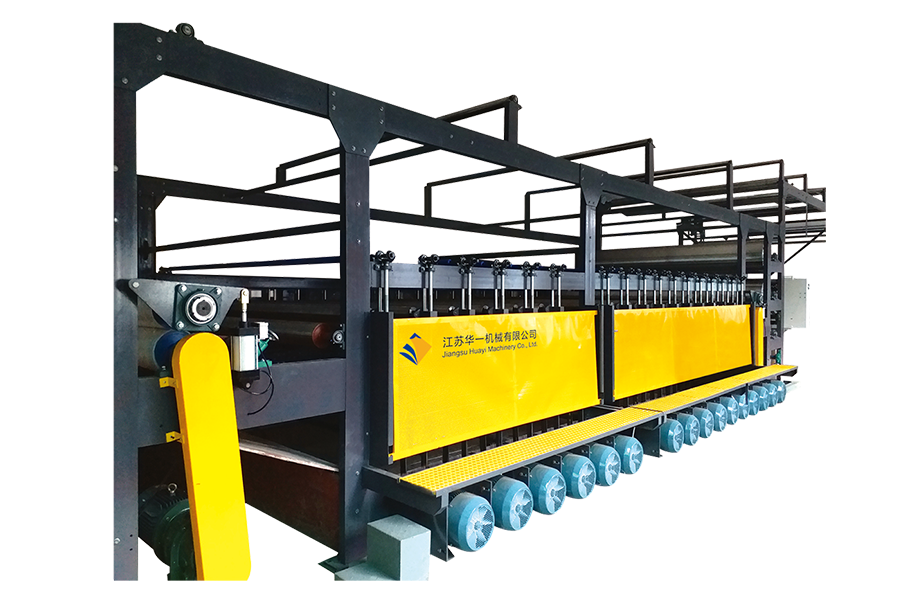 High Speed Polyester Dry/Wet Sueding Machine Factory, ManufacturersJiangsu Huayi Machinery Co., Ltd. is China high-speed polyester sueding machine manufacturers and polyester wet sueding machine factory, ...View Product →
If you are evaluating whether to adopt wet sueding, check three things in advance: the drying capacity behind the machine, the water quality and treatment in your plant, and the effluent handling requirements in your local regulations. Wet sueding adds a water loop that some mills underestimate at the planning stage.
What High-Speed Sueding Really Means in Production
The SMA382C model is rated for operating speeds of 100 to 120 meters per minute on polyester, and that figure deserves context. Many general-purpose sueding machines run at 15 to 40 meters per minute. A machine that can hold 100 meters per minute changes the economics of a finishing line: the same order that took three shifts now takes one, and the freed-up capacity can run other products.
High speed does not mean every polyester fabric should run at maximum speed. Lightweight filament taffeta, stretch knit jersey, and microfiber suede are sensitive to heat and tension, and they often run better at lower speeds with lighter engagement. The rated maximum speed is headroom: it is the machine's capability for stable, long-run products such as standard lining or pongee, not a recommended speed for every style.
High-speed sueding places heavy demands on the supporting systems. Tension control must react in milliseconds; a tension spike at 100 meters per minute produces a streak that repeats for seconds before the operator can respond. The rollers must be well balanced to avoid vibration at high rotation speed. Dust extraction must handle the dramatically higher lint generation; a 200-centimeter-wide polyester fabric at 100 meters per minute produces several times more lint per hour than the same fabric at 30 meters per minute. If extraction is undersized, lint settles on the fabric, blocks sensors, and creates a fire risk in the presence of static discharge.
In practice, high speed matters most for mills that run long orders with few style changes. A plant processing 100,000 meters of the same polyester lining in a month will see a much faster payback from a high-speed machine than a sample house processing short runs of many different fabrics. Evaluate your order book honestly before paying for maximum speed capability.
Matching the Machine to Your Polyester Fabric Type
Polyester is not one fabric. The construction, weight, and yarn type determine which machine configuration will produce the desired finish without damaging the fabric. A machine that performs beautifully on woven lining can ruin a stretchy knit jersey in the first pass.
Knitted polyester fabrics, including single jersey, fleece, mesh, and stretch sports knits, are the most sensitive group. The knitted loop structure can be flattened, stretched, or distorted by excessive pressure or tension. For these fabrics, a planetary roller configuration with fine carbon or ceramic fiber is the established choice. The planetary movement distributes the abrasive action evenly and at a low engagement depth, which protects the loop structure. The planetary carbon/ceramic fiber sueding machine for knitting X model is designed around this principle, with low-pressure engagement and tension control suited to elastic and easily stretched constructions.
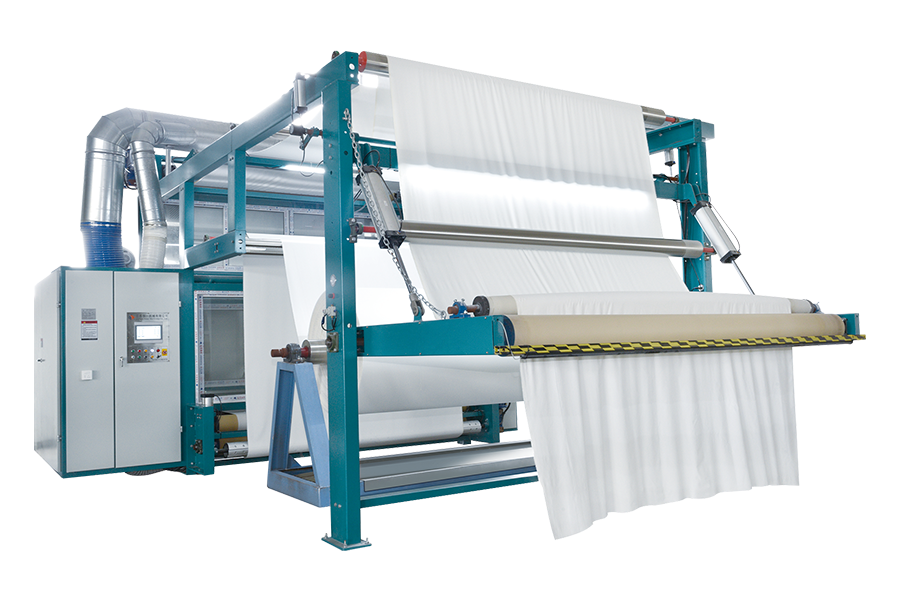 Custom Planetary Carbon (Ceramic) Fiber Sueding Machine for Knitting X-Model FacJiangsu Huayi Machinery Co., Ltd. is China custom Planetary Carbon (Ceramic) Fiber Sueding Machine for Knitting X-Model manufacturers and...View Product →
Woven polyester fabrics, such as taffeta, pongee, oxford, twill, and lining materials, are dimensionally stable and tolerate a wider range of roller types and pressures. A vertical or horizontal combined machine with carbon or emery rollers is a common match because the stable woven structure allows higher engagement and faster throughput. The planetary carbon/ceramic fiber sueding machine for woven Y model extends the benefits of planetary motion to woven goods, which is useful when the mill processes both knit and woven styles and wants a common handling principle.
Custom Planetary Carbon (Ceramic) Fiber Sueding Machine for Woven Y-Model FactorJiangsu Huayi Machinery Co., Ltd. is China custom Planetary Carbon (Ceramic) Fiber Sueding Machine for Woven Y-Model manufacturers and Pl...View Product →
Microfiber polyester fabrics, widely used for synthetic suede outerwear and sportswear, require the finest abrasive and almost always benefit from wet sueding. The micro-denier fibers are easily bent and fused by heat; a coarse emery roller produces glazing instead of a soft nap. Fine ceramic rollers and a wet process are the safe combination for microfiber.
Blended polyester-cotton fabrics sit between the two fiber behaviors. The cotton component produces more dust and responds more readily to abrasion, while the polyester component needs heat control. Running a blend at the less aggressive end of the polyester parameter range is a practical starting point, then adjusting based on the cotton content.
The table below summarizes typical machine recommendations for common polyester fabric categories.
| Polyester Fabric | Typical Weight | Recommended Roller | Recommended Process | Typical End Use |
|---|---|---|---|---|
| Knit jersey, 100% polyester | 120-250 g/m² | Fine carbon or ceramic, low pressure | Dry or wet, moderate speed | T-shirts, sportswear, dresses |
| Woven polyester lining | 60-120 g/m² | Carbon or fine emery | Dry, low to medium tension | Jacket lining, bags, umbrellas |
| Microfiber polyester | 80-200 g/m² | Ceramic, fine grade | Wet sueding, low engagement | Suede-like outerwear, sportswear |
| Polyester fleece | 200-350 g/m² | Carbon, multiple light passes | Dry | Hoodies, blankets, casual wear |
| Heavy polyester outerwear shell | 200-400 g/m² | Emery, higher engagement | Dry | Technical outerwear, workwear |
When you discuss a machine order with a supplier, always bring representative samples of your three most important polyester fabrics and ask to run them on the actual machine. A machine builder that refuses to run trial fabric, or that only shows laboratory swatches, is not giving you the information you need to make a safe purchase decision.
Common Defects on Sueded Polyester and How to Prevent Them
Every sueding line produces defects at some point, and the most common ones on polyester have well-understood causes. Knowing them helps you specify the right machine features and train your operators to react before a full batch is damaged.
Warp-direction streaks are the most frequent complaint. They appear as visible lines running in the length direction of the fabric, and they are usually caused by one of three conditions: a worn or damaged area on the abrasive roller, a pressure variation across the roller width, or a tension surge during fabric splicing. The prevention plan is to track the accumulated runtime of every abrasive sleeve, to check the pressure profile across the roller at each shift change, and to use flat, butt-seamed splices with a seam detector that lifts the rollers.
Shade change or luster shift is a second common industry problem. Sueding changes the way light reflects from the fabric surface, and an aggressive pass on a dyed polyester can make the color appear lighter or frosted. This is not a defect in the dyeing; it is a property of the sueded surface. The only safe approach is to run a short sample on the actual dyed fabric before each bulk order, hold it against the customer's approved standard, and adjust the machine parameters until the shade matches.
Melted fiber tips, visible as white specks or hard shiny dots, indicate overheating at the roller-fabric interface. This happens when the roller speed differential is too high, the engagement is too deep, or the fabric is too lightweight for the abrasive grade. The immediate corrective actions are to reduce the roller speed, lighten the engagement, or switch from dry to wet sueding so that water carries the heat away.
Over-sueding, characterized by an excessively hairy or woolly surface and a measurable loss of fabric strength, occurs when the operator runs too many passes or uses too much engagement. On polyester, over-sueding also accelerates pilling in the garment. The control is to establish a reference sample and to document the exact parameter set that produced it, then to verify with a light-box comparison before every production run.
Distortion on knitted polyester appears as stretched, misshapen loops or a flattened fabric surface. The cause is tension that is too high for the knit structure, or a roller engagement that crushes rather than abrades. Using a planetary low-pressure machine, reducing the rewind tension, and running more passes at lighter engagement are the standard fixes.
Finally, static contamination and lint redeposition are chronic issues on dry polyester sueding. Antistatic bars at the unwind, rewind, and between roller groups are essential, and the dust extraction hood must be cleaned regularly. Some mills add a small humidifier in the sueding area to raise the relative humidity, which reduces static and improves process stability without introducing the full cost of wet sueding.
Key Specifications to Evaluate Before Buying
Once you have defined the fabric range and the target finishes, the machine specification sheet becomes the working document. Comparing machines on paper is easier when you link each specification to the practical consequence it has on your production.
| Specification | What It Affects | Question to Ask the Supplier |
|---|---|---|
| Working width | Fabric width capacity and floor space requirement | Can the machine run a 160 cm fabric without edge marking? |
| Number of roller stations | Finish uniformity and process flexibility | How many passes are typical for a peach-skin finish on 75D polyester? |
| Maximum and minimum speed | Productivity and quality control at low speed | What is the maximum speed without tension spikes on lightweight fabric? |
| Tension control system | Stretch and streak prevention, especially on knits | Does the machine maintain tension during roll changes and splices? |
| Dust extraction capacity | Air quality, fabric cleanliness, and fire safety | What is the extraction air volume at each roller hood? |
| Wet processing capability | Handfeel range and heat management | Can water flow be adjusted from misting to full saturation? |
| PLC and recipe management | Repeatability and operator skill dependence | Can the machine store at least 50 product recipes and recall them by fabric code? |
| Installed power | Energy cost and electrical infrastructure | What is the total connected load, and what is the average consumption per hour? |
Beyond the specification sheet, ask for the machine's maintenance schedule and the list of wear parts with their expected lifetime. Abrasive sleeves, guide rollers, bearings, and seals are the items you will replace regularly, and their availability directly affects your uptime.
Supplier Capability and After-Sales Support
A sueding machine is a 10-to-15-year investment, and the supplier's engineering depth and service network matter as much as the machine specification. The purchase decision should include an evaluation of the manufacturer's track record, production capacity, and ability to support the machine after installation.
Jiangsu Huayi Machinery, operating under the HUAYI brand, has been building sueding machines for more than two decades. The company started with a single sueding machine model and has since expanded to more than 30 sueding machine models covering vertical, horizontal, planetary, dry, wet, and CNC configurations. Its production base includes a modern factory of more than 10,000 square meters and an office space above 1,000 square meters, with fixed assets exceeding 50 million RMB. Huayi has been recognized as a national high-tech enterprise continuously since 2016, and the company holds 31 invention patents and 30 utility model patents. For a finishing mill, these are meaningful indicators: the supplier has survived through multiple industry cycles, has invested in engineering, and has a manufacturing base that supports consistent machine quality.
Delivery experience is also relevant. Huayi has supplied equipment to mills in Vietnam, Bangladesh, India, Pakistan, Turkey, Egypt, Indonesia, Iran, Uzbekistan, Russia, Thailand, South Korea, Peru, Nicaragua, Ethiopia, and China. That geographic spread means the machines operate under different humidity levels, fiber qualities, and maintenance cultures, which gives the engineering team feedback that a purely domestic supplier may not have.
When you evaluate any supplier, request the following documents and commitments: the actual certificates and patents, a spare parts price list with guaranteed availability, a written installation and commissioning schedule, operator and maintenance training in your language, and a defined response time for troubleshooting. A reliable supplier will provide all of these without hesitation.
For a closer look at the configuration options available, you can review the dry and wet polyester sueding equipment pages on the HUAYI site, which show how the same machine family is adapted to different production needs.
Cost Considerations and Return on Investment
The purchase price of a sueding machine is the smallest part of its lifetime cost. A realistic financial evaluation includes energy consumption, abrasive consumables, water and effluent handling, labor, maintenance, and the cost of rejects. Comparing only purchase prices leads to decisions that look good on paper and hurt the P&L for years.
Energy is the first operating cost. The drive motors for the abrasive rollers, the extraction fans, the hydraulic or pneumatic systems, and the PLC and controls all consume power. On a wet sueding line, the drying stage typically adds substantially to the connected load. Ask the supplier for the total installed power and for typical consumption at your expected operating speed.
Abrasive consumables are the second cost. Emery, carbon fiber, and ceramic sleeves wear out and must be replaced. The replacement interval depends on the fabric type, the engagement pressure, and the roller speed. A mill processing abrasive-coated technical fabrics may replace sleeves every few weeks, while a mill running soft knitted polyester may get months of life. Track the cost per 100,000 meters in your evaluation so that you compare consumables fairly between machine options.
Water and effluent are the third cost, and they apply only to wet sueding. The water consumption includes the process water and the wash water for the filtration system. Some regions restrict wastewater discharge from wet finishing processes, and a treatment step may be required. Verify the local environmental rules before committing to a wet sueding line.
Reject reduction is often the largest hidden saving. Consider a plant that processes 1.5 million meters of dyed polyester per year. If the sueding defect rate is 4 percent and a new machine with stable tension control and PLC recipes reduces it to 1 percent, the plant saves 45,000 meters per year. At a finished fabric value of $1.50 per meter, that is an annual saving of $67,500 before considering the value of the reduced labor and re-processing time.
High-speed capability adds another layer of return. A machine that runs 100 meters per minute instead of 30 meters per minute processes the same order in roughly one-third of the machine time. The freed capacity can take on additional orders or reduce the number of shifts for the same output. The example above shows why the total cost per meter, measured over five years, is the number that matters, not the initial purchase price.
Polyester sueding is a precise and controllable process when the machine is matched to the fiber. The right combination of abrasive type, dry or wet processing, tension control, speed capability, and supplier support determines whether you deliver the peach-skin handfeel your customer demands or lose the order to a competitor. Start with the fabric, define the finish, run trials on your actual polyester, and choose a supplier with the engineering history and service network to back the machine for the long term. The technology for successful polyester sueding exists, and it is available to mills that take the time to evaluate the process properly.