
 简体中文
简体中文 English
 عربى
عربى



A finishing manager in Tirupur loads a batch of compact cotton jersey onto a sueding machine and expects the same soft, peach-skin hand at the exit as the lab sample showed an hour earlier. Fifty meters later, the fabric has changed from a flat, technical face to a muted, plush surface, while the shade, weight loss, and stretch recovery all remain inside tolerance. The reason that same result can be repeated shift after shift is simple: a modern textile sueding machine is a precisely controlled abrasion system, not a random sanding box.
The short answer to how a textile sueding machine works is that it passes fabric over one or more rollers covered with abrasive grain. The rollers rotate at a controlled speed while the fabric is held under adjustable tension, and the relative movement between the abrasive and the cloth lifts, cuts, and frays fiber ends into a short, dense, even pile. Every control on the machine, from roller speed and cloth speed to wrap angle, tension, traverse, and grit selection, exists to manage how many fibers are raised and how short they are cut.
What Is a Textile Sueding Machine?
A textile sueding machine is a mechanical finishing machine that raises a very short, even pile on fabric through controlled abrasion. It is the industrial answer to a consumer expectation: fabric that feels soft and warm like suede or peach skin, without the cost or weight of genuine suede, and with repeatability at production speed. The finish is physical, not chemical, which is why it is often preferred for premium garments and home textiles. It does not wash out quickly, and it creates a real surface structure rather than a coating of softener.
In a typical finishing line, sueding sits after wet processing and before heat-setting or softening. The fabric is opened to full width, run dry or partly wet through the sueding head, brushed to remove loose fiber, and wound onto a new roll. Sueding is a single-side or double-side operation. Most apparel fabrics are sueded on the face; some constructions, like brushed-back fleece, run both sides to develop a soft inner layer.
Mills use the words sueding, brushing, and napping interchangeably, but the processes are different. Sueding produces the shortest pile, typically in the range of 0.1 to 0.3 mm, and gives a peach-skin or suede-like touch. Brushing raises a slightly higher, more directional nap. Napping opens the surface into a loftier pile, and shearing trims that pile to a fixed height. The choice depends on the target hand feel and on the fabric's end use.
| Process | Tool | Action on fibers | Resulting surface |
|---|---|---|---|
| Sueding | Bonded abrasive grain on rollers | Cuts and lifts fiber ends into a very short pile | Peach-skin or suede-like, soft and muted |
| Brushing | Fine wire or bristle points | Combs and raises longer fibers into a nap | Directional nap, fluffy and smooth to one side |
| Napping | Metal wire or teasel points | Opens and pulls fibers into a lofty pile | Thick, cloud-like mat, warm to the touch |
| Shearing | Rotary blades | Trims raised pile to a uniform height | Even, level surface with consistent depth |
Commercial importance explains why mills invest in this machine at all. Brands specify sueded hand for sleepwear, loungewear, activewear linings, outerwear, automotive interior fabrics, and upholstery. The raised micro-pile changes the way the fabric reflects light, which is why a sueded fabric can appear slightly lighter or duller than the same fabric unsueded. Managing that shade change is part of the finisher's daily work, and it is one reason the machine needs precise parameter control rather than an on-off switch.
How the Machine Raises Fibers: The Working Principle in Detail
At its core, the sueding machine creates three things at the point of contact: a speed difference, a contact pressure, and a rubbing action. The abrasive grains on the roller catch the fiber ends that protrude from the yarn surface, then lift them or break them, turning an otherwise smooth cloth face into a field of micro-fibers. The depth and density of that fiber field are set by the intensity of the rubbing.
The fabric is threaded so that its face runs over the abrasive along a defined arc, called the wrap angle. The abrasive roller surface moves at a high rotational speed, normally much faster than the speed at which the fabric is transported. This relative slip is the source of the friction. If the fabric is stopped while the roller continues to turn, the same area is abraded repeatedly and the finish becomes very aggressive; if the fabric matches the roller speed, almost no abrasion occurs. The ratio between the two speeds is the first thing an operator sets.
Fiber behavior explains why the result is a uniform pile instead of torn yarns. In a spun yarn, individual fiber ends stick out at various angles. The abrasive grains contact these protruding ends, lift them, and break or cut them at slightly different lengths. Because the action involves millions of grains across the full width of the roller, the distribution is statistical, and the pile appears uniform providing the abrasive is even and tension is stable across the width.
Friction also generates heat. Cotton handles this heat easily. Thermoplastic fibers such as polyester and nylon do not: the heat softens the tips of the fibers, which then melt into small hard spheres, creating a defect called glazing, and leave residue on the roller. This is why wet sueding exists, and why dedicated polyester sueding machines are built with cooling and liquid application in mind.
Most machines abrade with the fabric moving in the same direction as the roller surface at the contact point, but the contact geometry can be reversed for different effects. Single-pass multi-roller machines can produce a heavy, uniform finish in one run, which is the standard configuration for high-output finishing plants. The principle remains the same whether the machine has one roller or ten: controlled friction against a moving abrasive surface.
Core Components That Control the Finish
The finish quality of a sueding machine depends less on the machine frame than on three sub-systems: the abrasive roller system, the fabric feed and tension control, and the dust handling system. These work as a loop. The roller defines how much abrasion is available, the feed system defines how much of that abrasion reaches the fabric, and the dust system keeps the abrasive surface clean and repeatable.
Abrasive rollers and roller materials
Most sueding machines carry one of four abrasive types: sandpaper strips, emery or diamond-coated rollers, ceramic fiber rollers, and carbon fiber rollers. Sandpaper strips are wound spirally around a steel or rubber-core roller, and the strip is rewound or replaced as the grain wears. Emery and diamond rollers bond the abrasive grain directly to the surface, which extends service life and keeps the finish stable over long production runs. Ceramic and carbon fiber rollers are softer, and they are chosen when a gentle, extremely even pile is needed, especially on knitted and lightweight fabrics.
| Roller type | Typical grain | Best suited for | Finish character | Main limitation |
|---|---|---|---|---|
| Sandpaper strip | Aluminum oxide, P80 to P400 | Cotton and general textiles | Controllable, economical, easy to variate grit | Wears and must be rewound or replaced |
| Emery or diamond-coated | Emery or diamond grain | Synthetic leather, heavy and dense fabrics | Aggressive but consistent, long service life | Stiffer contact, wet-capable versions preferred |
| Ceramic fiber | Ceramic filaments or nonwoven | Medium to fine woven fabrics | Fine, even, slightly plush surface | Less aggressive on coated or resin-treated cloth |
| Carbon fiber | Carbon filament brushes or rolls | Delicate knits and lightweight fabrics | Very soft, gentle, low-distortion finish | Lower cutting rate, slower production |
Grit selection follows the same logic as sandpaper in a workshop. Coarse grains, roughly P80 to P120, cut fast and are used on heavy cotton, coarse constructions, and denim. Medium grains, P150 to P240, serve most apparel fabrics. Fine grains, P300 and above, produce a very short, soft pile and are used for peach-skin finishes on knits and for synthetic blends. The finer the grain, the smaller the fiber mass removed and the lower the strength loss.
Fabric feed, tension, and speed control
Nip rollers, expander rollers, and dancer rollers guide the fabric into the abrasive head and control its tension. Tension is the main lever for contact pressure: higher tension presses the fabric harder into the abrasive, producing deeper abrasion; lower tension lets the roller skim the surface lightly. Cloth speed controls how long each point stays in the abrasion zone. Modern machines use frequency inverters and PLC-based synchronization, so the operator can enter a differential ratio rather than guessing at two separate speed settings.
Wrap angle is the second lever. By moving an idle roller, the operator changes how much of the abrasive circumference touches the fabric. A small wrap angle gives a light, surface-cleaning effect; a large wrap angle puts more of the roller in contact and produces a heavier, deeper finish. Together with tension, the wrap angle determines the force budget of the whole process.
Traverse drive and dust extraction
Abrasive rollers wear unevenly if the fabric always touches the same line. The traverse drive oscillates the roller or the fabric-guiding mechanism laterally, so the fabric is presented to a continuously changing point on the abrasive. This keeps the finish uniform and extends roller life. Traverse speed also affects the surface character: a slow traverse creates a very slightly directional pattern, while a fast traverse gives a more neutral, isotropic pile.
Dust extraction is the third critical system. Sueding removes lint and abrasive dust continuously, and the machine depends on airflow to carry the particles away. If extraction is weak or blocked, dust packs into the abrasive surface, cutting efficiency drops, and the fabric develops streaks or a dull, uneven pile. For this reason, finishers treat the extraction line as part of the process rather than as an accessory. An automated dust extraction for sueders also keeps the working environment cleaner and reduces fire risk from accumulated lint.
The Sueding Process Step by Step
From roll to roll, a typical sueding run includes the following steps, and each step is a point where a defect can enter if the operator is not careful:
- Preparation. The fabric is inspected, rewound open-width, and the ends are spliced with flat, strong seams. Thick or wrinkled seams are the most common cause of machine stops during sueding.
- Threading. The fabric is guided over the entry rollers, around the abrasive head with the required wrap angle, and through the exit nip. The face side is presented to the rollers unless a back-side finish is requested.
- Parameter setting. The operator sets cloth speed, roller speed, tension, traverse speed, and the number of engaged rollers. Most lines start from a saved recipe and then adjust for the current batch.
- Trial run. A short length is run and checked for hand, shade change, and strength. The trial protects the whole batch against an offset that is invisible on paper.
- Production run. The machine runs continuously, with seam detectors reducing speed at splices so the abrasive does not catch the thicker seam. Dust is extracted throughout.
- Final inspection. The finished roll is checked against the approved sample and labeled with the recipe used.
The trial run matters more than most parameter tables. Fabric takes the abrasive differently depending on moisture content, dye lot, and even the humidity in the hall. A disciplined finisher keeps a sample card for each reference and records the parameter set that produced it. This is how a sueding machine becomes a profitable tool rather than a source of claims.
Quality checks on a sueding line are usually weight loss and strength loss. A normal apparel sueding run removes a small amount of fiber mass, often well under 2 percent, but heavy sueding of delicate knits can remove more. Tensile strength at the abraded points should be monitored on the first batch of any new fabric, because over-sanding is the quickest way to turn a good cloth into a liability.
Key Parameters and How They Change the Fabric Surface
Five parameters determine the outcome of any sueding operation: the speed differential between roller and cloth, tension, wrap angle, grit, and the number of abrasion events. They are not independent. Changing one usually requires recalibrating the others, and experienced finishers think of them as a single recipe.
Roller speed relative to cloth speed
The speed differential is the heart of the process. Typical cloth speeds range from about 8 to 40 m/min depending on machine and fabric, while the abrasive roller surface speed is deliberately much higher. A large differential produces a strong cut, a dense pile, and a more visible matte effect; a small differential produces a light, smooth, almost polished surface. On machines with a display, the operator normally enters the differential ratio directly.
Tension and wrap angle
Tension pushes the fabric into the abrasive, and the wrap angle sets how much of the abrasive surface is doing the pushing. High tension with a large wrap angle is the most aggressive combination and is used on sturdy wovens. Low tension with a small wrap angle protects knits but can leave the finish patchy if the fabric is not perfectly flat. Edge tension is a separate concern: if the edges are pulled tighter than the center, the selvedges will be more abraded and appear different in shade.
Grit and number of abrasion events
Grit determines the scale of the cut, and the number of abrasion events determines how many times the cut is repeated. A fine grit used through several rollers can produce a heavier but still soft pile, while a coarse grit used once can produce a shorter, rougher result. Multi-roller machines achieve high production by running several abrasive heads in a single pass, which also keeps the result more uniform than re-running the fabric several times. Each extra pass increases shade change, so the goal is to reach the target finish in the smallest number of passes.
Dry sueding versus wet sueding
Dry sueding is the standard for cotton and most natural-fiber fabrics. Wet sueding adds water or a processing liquor to the fabric surface before it contacts the abrasive, which cools the fiber and carries away abraded particles. For polyester, nylon, and microfiber synthetic leather, wet sueding is often mandatory: without it, the heat of friction melts fiber tips and leaves a shiny, glazed surface that fails the soft-touch requirement.
Sueding Machine Configurations: Vertical, Horizontal, Planetary, Dry and Wet
Machine configuration determines which fabrics a sueding line can run safely and how much production capacity it delivers. The four families below cover the majority of textile finishing plants, and each has a clear set of strengths.
Vertical combined sueding machines
Vertical combined machines arrange the abrasive rollers in a vertical bank, and the fabric passes over the rollers along a defined path. This layout is compact, allows a large number of rollers in a small floor area, and suits woven fabrics and heavyweight cottons that can tolerate moderate tension. For mills that process mostly woven cotton, twill, and moleskin, a vertical combined sueding machine MM model is a common starting point because it balances productivity with control over the final pile depth.
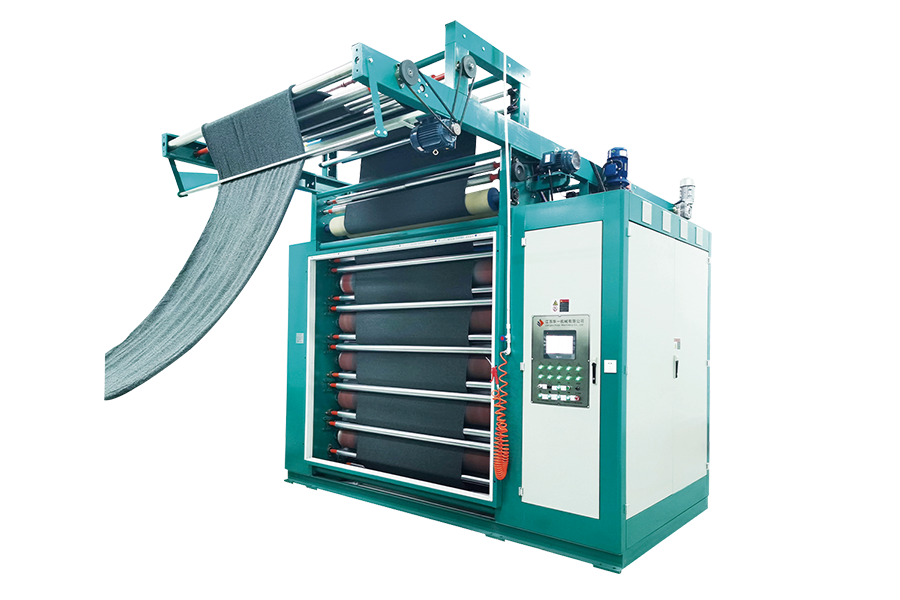 Vertical Double-sided Sueding/Peaching Machine Factory, ManufacturersAs China double-sided sueding/peaching machine manufacturers and suppliers, Jiangsu Huayi Machinery Co., Ltd. custom vertical combined su...View Product →
Horizontal combined sueding machines
Horizontal combined machines run the fabric through the abrasive head in a straight, horizontal line. The cloth path is simpler, tension is lower, and the operator can see the contact area directly. This configuration is popular for knitted fabrics, light wovens, and denim sueding where a flat, even face is the goal. Many plants choose a horizontal combined textile sueding machine for its ease of threading and its gentle treatment of stretchy or delicate materials.
Planetary sueding machines
Planetary machines take a different approach. Instead of wrapping the fabric around a roller, they rotate a set of abrasive carriers around the fabric while the cloth moves through the center on a supporting bed. The fabric is never bent over a sharp edge, tension stays minimal, and the abrasive approaches the surface at a shallow angle. This makes planetary machines the first choice for lightweight knits, open constructions, and fabrics that cannot tolerate stretch or distortion. A compact planetary carbon fiber sueding machine fits this role when the target is a soft, even peach-skin finish on fine cotton or blended knits.
Dry/wet combined machines
Dry/wet machines offer both operating modes in one frame. In dry mode they behave like a conventional sueder; in wet mode a liquor applicator wets the fabric immediately before the abrasive head, keeping temperatures low and washing away fiber dust. These machines are essential for polyester, nylon, and coated or laminated surfaces, and they give a plant the flexibility to run synthetics and naturals on one platform.
| Configuration | Fabric path | Tension level | Best suited for |
|---|---|---|---|
| Vertical combined | Rollers arranged around a vertical arc | Moderate to high | Wovens, heavy cottons, moleskin, denim |
| Horizontal combined | Straight horizontal pass | Lower | Knits, lighter fabrics, velour, delicate wovens |
| Planetary | Carriers rotate around the moving fabric | Minimal | Lightweight knits, open structures, sheer fabrics |
| Dry/wet combined | Standard path plus liquid application | Variable | Polyester, synthetic leather, heat-sensitive materials |
How Fabric Type Determines the Right Sueding Setup
There is no universal sueding recipe. The correct setup depends on fiber content, yarn type, fabric construction, dye depth, and the target hand. The practical method is to start from a known reference and then adjust speed, tension, and grit until the sample matches.
Cotton and cotton blends
Cotton is the easiest fiber to suede because its short staple ends lift readily and accept a fine, even pile. The main risks are strength loss and shade change. Fine to medium grit, moderate tension, and a single pass usually produce a clean peach-skin finish. Heavy cotton weaves such as moleskin benefit from a vertical combined machine and slightly coarser grain to create a short, dense, velvet-like surface. Blends with polyester inherit some of the heat sensitivity of the synthetic component.
Polyester and other thermoplastic fibers
Polyester sueding is a heat-management problem. The fiber melts before it bruises, so the machine must either run at a reduced speed differential, use a fine emery or ceramic or carbon roller, or operate wet. Mills producing polyester suiting, lining, and sportswear at high output typically choose a machine built for this duty. A high-speed dry/wet sueding machine for polyester SMA382C model covers both modes, which matters when the plant switches between dry cotton runs and polyester runs on the same floor.
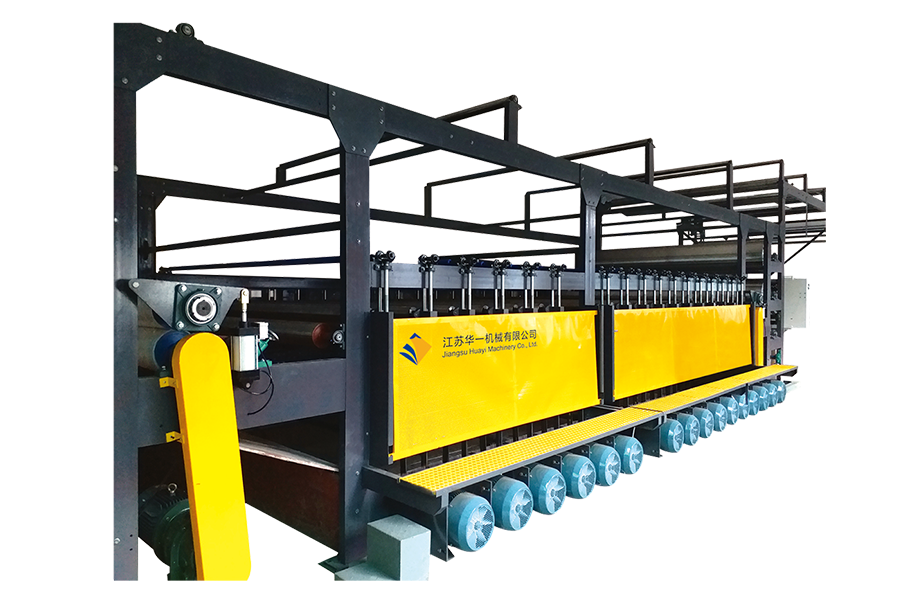 High Speed Polyester Dry/Wet Sueding Machine Factory, ManufacturersJiangsu Huayi Machinery Co., Ltd. is China high-speed polyester sueding machine manufacturers and polyester wet sueding machine factory, ...View Product →
Knitted fabrics
Knits distort easily. They need a low-tension path, a shallow wrap angle, and a fine or carbon-fiber abrasive. Planetary machines are often preferred because the fabric is carried rather than pulled over roller surfaces. Edge curling and edge stretching are the classic defects on knits, so the guiders and expanders must be set for the exact fabric width before the run starts.
Woven fabrics and denim
Wovens tolerate higher tension and more aggressive abrasion, which means the operator has a wider window of usable parameters. Denim sueding is a special case: the goal is not a soft peach-skin face but a gently abraded, broken-in surface that will develop further during garment washing. Denim-specific horizontal machines run the fabric flat and at higher speed, using medium-to-coarse emery.
Microfiber and synthetic leather
Microfiber synthetic leather is sueded to create a suede-like or napped surface for footwear, garments, and upholstery. The fibers are extremely fine and the base fabric is dense, so the abrasive must cut evenly without tearing. Diamond emery rollers and wet operation give the most controlled depth. For consistent depth on synthetic leather's dense microfiber face, finishers specify a diamond emery dry/wet sueding machine for synthetic leather LMH815 model, which combines the two capabilities in one frame.
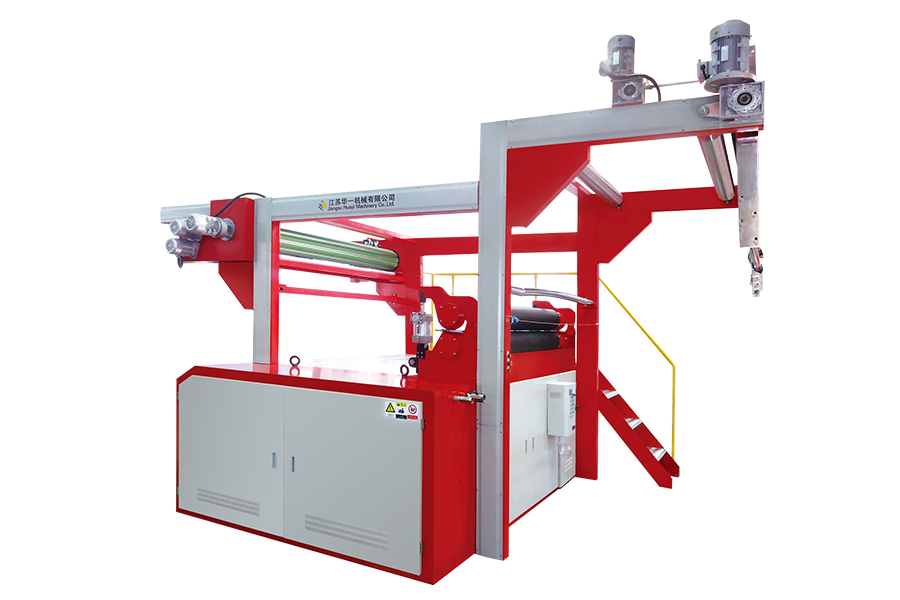 Custom Diamond Emery (Dry) Wet Sueding Machine for Synthetic Leather LMH815-ModeJiangsu Huayi Machinery Co., Ltd. is China custom Diamond Emery (Dry) Wet Sueding Machine for Synthetic Leather LMH815-Model manufacturer...View Product →
| Fabric | Preferred configuration | Abrasive suggestion | Common finish target |
|---|---|---|---|
| Cotton jersey or fleece | Planetary or horizontal | Fine sandpaper or carbon fiber | Peach-skin, soft hand |
| Cotton woven or twill | Vertical combined | Medium sandpaper or ceramic fiber | Matte, flat face |
| Denim | Horizontal denim-specific | Medium-to-coarse emery | Abraded, soft, broken-in surface |
| Polyester woven | Dry/wet horizontal or vertical | Ceramic fiber or fine emery in wet mode | Muted sheen, smooth drape |
| Microfiber synthetic leather | Dry/wet with diamond emery | Diamond grain in wet mode | Suede-like, napped surface |
| Moleskin heavy cotton | Vertical combined | Medium emery | Short dense pile, velvet touch |
Common Finish Defects and How to Correct Them
Even a well-maintained sueding machine produces defects when parameters drift, abrasive wears, or extraction is neglected. The table below summarizes the defects seen most often on production lines and the corrections that usually solve them.
| Defect | Likely cause | Correction |
|---|---|---|
| Streaks or uneven shade | Worn abrasive strip, uneven tension, blocked dust extraction | Rewind or replace roller, recalibrate dancer roll, clean extraction duct |
| Scattered bright or shiny spots | Heat glazing on polyester, wrong grit, excessive roller speed | Switch to wet sueding, use finer grit, reduce speed differential |
| Holes or weak areas | Excessive pressure or wrap angle, too many passes | Reduce contact, increase cloth speed, check fabric construction |
| Shade change larger than agreed | Over-raising on dark shades, coarse grit | Use finer abrasive, shorten passes, confirm shade with lab sample |
Shade change deserves a special note. Sueded fabric scatters more light than the original flat face, so the same dye will look slightly lighter or duller after sueding. This is normal, but it must be measured and communicated to the dyehouse, otherwise the final shipment will be rejected for shade. Dark shades are especially sensitive because the contrast between the raised pile and the un-raised background is more visible.
Strength monitoring is the other non-negotiable control. A mill should record the warp and weft breaking strength of the greige and finished fabric for each sueded reference. If strength drops by more than the agreed threshold, the recipe must be softened even if the hand feel looks acceptable. A soft surface is worthless if the garment tears at the seam.
What to Look for When Buying a Sueding Machine
The purchase decision should start from the fabric range and the required output, then work backward to the machine configuration. A machine that suits one mill perfectly can be wrong for another mill that processes different fabrics.
- Fabric width and weight range, since the working width and tension range must cover the full production plan.
- Roller configuration: number of rollers, interchangeability of abrasive types, and the availability of spare rollers for sandpaper, emery, ceramic, and carbon fiber.
- Dry and wet capability if the product mix includes polyester, nylon, or synthetic leather.
- Dust extraction performance and the ease of cleaning the extraction ducts.
- Cloth speed range, motor power, and the precision of the tension and differential controls.
- Seam detectors, edge guiders, and automatic thread-up, which directly affect labor load and defect rates.
- Spare parts lead time, commissioning support, and the manufacturer's experience with the same fabrics the mill runs.
Supplier depth matters as much as the machine itself. Huayi started with sueding machines two decades ago and has since expanded to more than 30 sueding machine models, with a product range that includes planetary, vertical, horizontal, dry/wet, and synthetic-leather-specific machines. The company holds 31 invention patents and 30 utility model patents, has been recognized as a National High-Tech Enterprise since 2016, and has delivered equipment to textile and leather processors in more than a dozen countries, including Vietnam, Bangladesh, India, Pakistan, Turkey, Egypt, Indonesia, Ethiopia, Uzbekistan, Russia, and others. For a finisher, that kind of track record shortens the commissioning curve and simplifies the spare parts question.
When comparing offers, ask the supplier which model they would recommend for the three most important fabrics in the plant, and ask for a trial run with those fabrics. A sueding machine is a tuning instrument, and the proof of a good supplier is in how quickly the trial reaches the target sample.
Final Thoughts
Understanding how a textile sueding machine works comes down to one sentence: the machine converts controlled friction into a repeatable, short pile on the fabric surface. Every engineering detail, from the abrasive grit to the traverse speed, exists to make that conversion precise and stable at production speed.
The same principle explains both the appeal and the risk of sueding. Done correctly, it lifts an ordinary fabric into a premium hand feel that buyers pay more for. Done carelessly, it removes strength, changes shade, and creates claims. A finisher who masters the five key parameters and chooses a machine that matches the actual fabric mix will find sueding one of the most profitable operations in the finishing plant.