
 简体中文
 English
 عربى




Picture a finisher running a 180 gsm polyester interlock through a standard sueding trial. Within the first few meters the surface softens and the light changes from hard and plastic to a soft matte. By the end of the roll, however, the edges may look stretched, the center may show a faint sheen, and the dust collector may already be full. That pattern explains why a polyester fabric sueding machine is best judged as a controlled system, not as an abrasive roll bolted to a frame. The machine must raise a uniform nap while keeping heat, tension, and fiber damage inside a narrow window. Get those three variables right and polyester gains a cotton-like or peach-skin hand. Lose control and the same machine produces shine, streaks, and strength loss.
What a Polyester Fabric Sueding Machine Actually Does
Conclusion first: sueding improves polyester hand feel by breaking and lifting surface fibers, not by coating the fabric with softness. The cloth passes against one or more abrasive rollers, usually covered with carbon fiber, ceramic fiber, or diamond emery. The action raises a fine nap, scatters reflected light, and changes the tactile signal from slick and cool to soft and dry. The effect is mechanical and durable, so it survives washing better than a surface finish that sits on top of the yarn.
On polyester wovens and knits, the result supports peach-skin apparel, micro-suede effects, dulled filament sheen, warmer hand for shirting, and softer drape for home textiles. The same treatment can improve automotive interior fabrics and synthetic leather backings, although those routes need different roller grades and tension settings. A sueded polyester also behaves differently downstream, because its increased surface area can change dye uptake, coating adhesion, and the way the fabric wrinkles.
Why Polyester Demands a Different Setup
The practical answer is that polyester is thermoplastic, so its sueding window is narrower than cotton's. Polyester melts around 255 to 260 C and softens well below that point. Friction from high-speed abrasion can raise local surface temperature quickly. When the surface gets too hot, filaments can flatten, glaze, or fuse into hard pills. When tension is too high, the fabric can stretch, skew, or develop edge curl. When tension is too low, the cloth can fold, vibrate, and take an uneven pattern. The machine therefore has to control energy input, not simply apply more pressure.
Dust is another polyester-specific issue. Sueding generates loose fiber, and if that fiber is not removed, it can re-deposit on the cloth, contaminate the next batch, or build up on rollers. Dry processing makes dust more visible; wet processing reduces airborne fiber but adds drying load and wastewater considerations. Neither route is automatically better. What matters is that dust extraction and cooling are designed into the process from the start.
Process Variables That Decide Hand Feel
Six variables decide most of the result: abrasive grade, roller material, tension, contact angle, line speed, and dust removal. They interact, so changing one usually requires adjusting another.
- Abrasive grade and material. Coarser grades raise nap quickly but risk strength loss. Finer grades give a cleaner peach-skin surface but may need more passes. Carbon fiber and ceramic fiber behave differently from diamond emery, especially on fine-gauge polyester knits.
- Tension. The fabric must stay flat without being pulled to its elastic limit. Higher tension improves flatness but can cause elongation, shine, and edge distortion.
- Contact angle. More wrap increases abrasion time and heat. Less wrap reduces the effect but can produce streaks if the fabric is not fully supported.
- Line speed. Speed changes dwell time. A higher speed can improve productivity, but it also demands tighter temperature, tension, and dust control.
- Dry or wet operation. Dry sueding suits many woven and knit polyester styles. Wet sueding can reduce dust and modify hand, but it requires compatible chemistry, drying capacity, and wastewater handling.
- Dust extraction and cooling. Loose fiber must leave the working zone before it re-enters the fabric. Well-designed automated dust extraction for sueding lines supports consistent hand feel and fewer surface defects.
Machine Configurations and Where They Fit
There is no single best configuration for every polyester fabric. The right choice depends on whether the material is knitted or woven, its weight and stretch, the required hand, line speed, and available space. A high-speed dry and wet polyester sueding system is usually the first route for continuous production because it combines speed with the ability to switch process mode. A planetary carbon or ceramic fiber machine is often chosen when the fabric needs a dense, uniform nap with low tension, especially on knits and fine woven styles. Vertical and horizontal combined machines offer flexible roller arrangements for mills handling several fabric types.
For high-volume polyester wovens and knits, a dedicated high-speed polyester sueding system can shorten the learning curve because tension, cooling, and dust controls are already matched to the material. For knits, the priority is low-tension transport and edge control. For wovens, the priority is flatness, uniform contact, and strength retention.
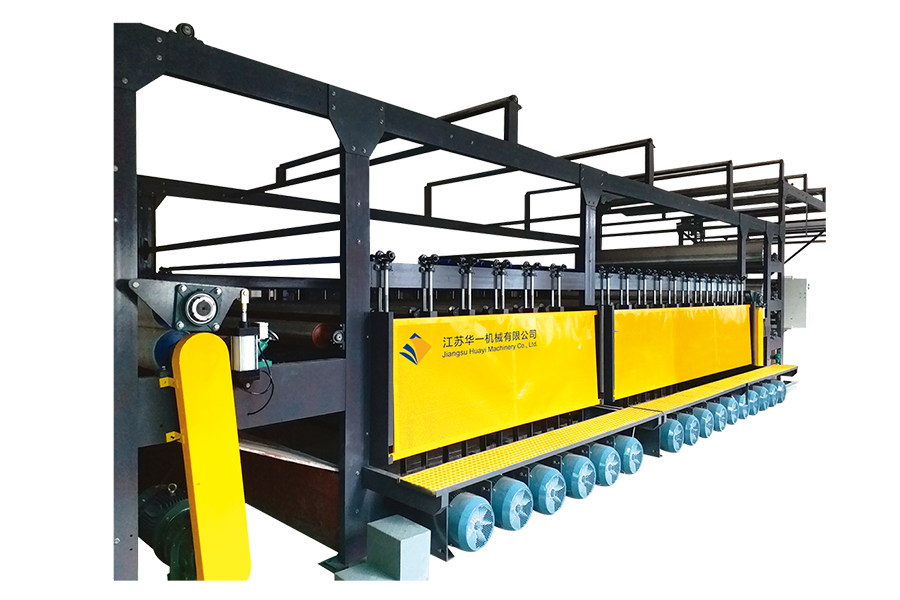 SMA382C High-Speed Dry/Wet Polyester Sueding MachineFor high-volume polyester, this dry/wet sueding system supports controlled fine pile and stable surface quality at high output, with configurable roller setups.View Product →
On circular and warp knits, a planetary carbon or ceramic fiber sueding machine for knitting can produce a soft, dense surface without pulling the fabric off gauge. Multiple small rollers distribute contact more evenly than a single large drum, which helps on stretch-sensitive polyester.
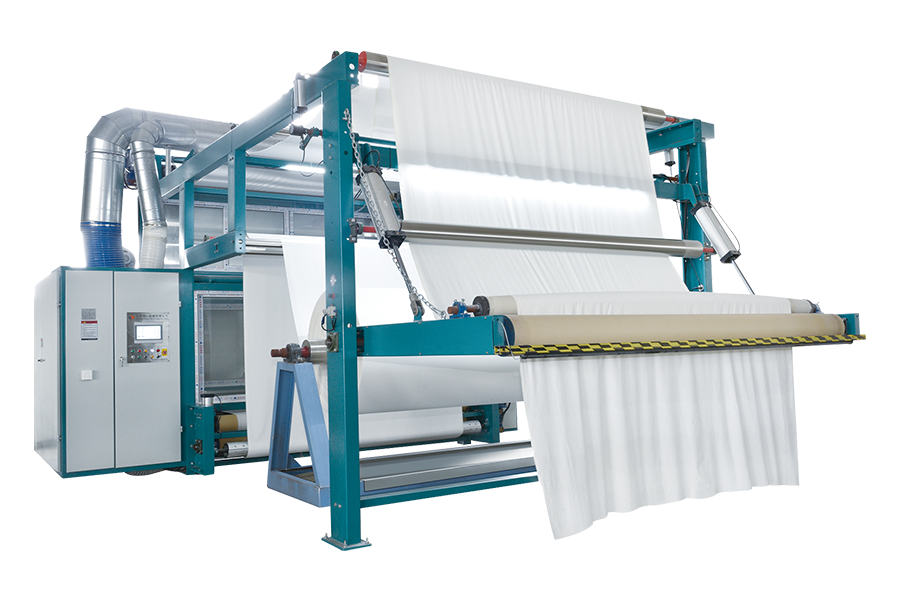 Planetary Carbon/Ceramic Fiber Sueding Machine for KnittingFor stretch-sensitive knits, this low-tension planetary sueding machine uses carbon or ceramic rollers to deliver uniform, delicate treatment and consistent sanding quality.View Product →
On polyester wovens such as outerwear, linings, and home textiles, the woven version of the planetary machine gives a more controlled nap on stable cloth. It is also practical when a mill changes between plain, twill, and fine jacquard constructions.
Planetary Carbon/Ceramic Fiber Sueding Machine for Woven FabricsFor high-end woven apparel and home textiles, this Y-model produces a short, dense peaching effect with online tension, pressure, and speed control for repeatable results.View Product →
| Machine format | Typical polyester use | Control focus | Main risk |
|---|---|---|---|
| High-speed dry/wet polyester system | Continuous woven and knit polyester, thin to medium weights | Tension, cooling, roller grade, dry/wet changeover | Heat glaze, elongation, dust carryover |
| Planetary carbon or ceramic fiber for knits | Circular knit, warp knit, stretch polyester | Low tension, even wrap, edge control | Skew, over-sueding, needle line distortion |
| Planetary carbon or ceramic fiber for wovens | Outerwear, lining, home textile polyester | Flatness, pressure balance, strength retention | Warp strength loss, shading, streak marks |
| Vertical or horizontal combined machine | Multi-style mills and broad width ranges | Roller combination, quick change, tension | Changeover downtime, roller matching errors |
Specification and Acceptance Checklist
Start with a fabric trial and an acceptance standard, not with a parameter table. A machine that looks strong on paper can fail on a 120 gsm polyester knit because web control, cooling, or dust removal does not match the material. Before purchase, confirm working width, weight range, knitted and woven mix, required line speed, roller change system, dust extraction capacity, energy demand, and service support. Ask for a trial on your own fabric, and judge the result after washing, not only off the machine.
- Hand feel and appearance. Check softness, nap density, matte level, and shade uniformity under controlled lighting.
- Strength and stretch. Measure tensile and tear loss, elongation, and elastic recovery on stretch polyester.
- Surface defects. Inspect for streaks, edge marks, fused pills, and re-deposited dust.
- Dimensional stability. Confirm shrinkage, skew, and bow after finishing and washing.
- Production fit. Match machine speed to the line, and confirm roller change time and spare parts availability.
Operation and Maintenance for Repeatable Hand Feel
Consistency comes from roller management, tension calibration, and cleaning discipline. Abrasive rollers wear, and a worn roller can change hand feel long before it looks damaged. Keep a roller log, check dynamic balance, and replace or dress rollers on a schedule based on meters run and fabric type. Calibrate tension sensors and guide rollers after every major changeover. Clean dust ducts, filters, and cooling surfaces before they load up, because restricted airflow raises surface temperature and changes the finish. Record yarn lot, beam tension, and finishing history alongside machine settings.
Polyester sueding rewards a narrow, well-controlled process rather than maximum pressure. The machine must raise a uniform nap while keeping heat, tension, and dust inside limits the fiber can tolerate. That is why selection should be based on fabric trials, roller configuration, dust extraction, and service support, not on a single speed figure. Jiangsu Huayi Machinery, operating as HUAYI, has spent more than two decades in sueding and surface finishing, with over 30 sueding machine models, more than 60 patents, and installations across major textile markets. That experience is useful at the selection stage, when the real question is not whether a polyester fabric sueding machine can soften the cloth, but whether it can repeat the same hand, batch after batch, without hiding defects in the finish.