
 简体中文
简体中文 English
 عربى
عربى



In the value chain of the modern textile industry, the technical level of Textile Finishing Machines directly determines the premium potential of the final fabric. As a core process for enhancing the physical touch of fabrics, Fabric Brushing and Sueding imparts a unique tactile dimension to textiles, transforming them from cold industrial products into high-end fashion fabrics with a "breathable" feel. With global consumers becoming increasingly demanding regarding skin affinity, modern sueding technology has evolved into a comprehensive science integrating material mechanics, surface physics, and precision electronic control, aiming to achieve micron-level modification of every single fiber.
Why has the Knitted Fabric Sueding Machine become the core of high-quality garment production?
Due to their unique loop geometric structure, knitted fabrics exhibit high instability during processing, making them extremely prone to multi-dimensional deformation, edge curling, and even physical unraveling. Traditional sueding equipment often causes longitudinal stretching, drastic latitudinal shrinkage, or serious unevenness in GSM (Grams per Square Meter) distribution due to excessive rigid tension. Therefore, a high-performance Knitted Fabric Sueding Machine has become an indispensable core asset for high-end lingerie, yoga wear, and fast-fashion brand factories.
What are the main differences between knitted fabric sueding and woven fabric sueding?
To achieve a premium hand feel without compromising the structural integrity of knitted goods, specialized sueding technology must address the inherent elasticity and delicacy of the knit loop. Unlike woven fabrics, which possess a stable interlaced grid, knitted materials require a sophisticated mechanical ecosystem that prioritizes extreme stability, precision expansion, and delicate fiber interaction to prevent irreversible fabric damage.
|
Feature |
Knitted Fabric Sueding |
Woven Fabric Sueding |
|---|---|---|
|
Structural Basis |
Interconnected loops (highly elastic/unstable) |
Interlaced warp and weft (stable/rigid) |
|
Tension Management |
"Tension-free" logic; multi-unit synchronous drive |
Mechanical brake or high-tension friction control |
|
Width Control |
Multi-stage active expanding & reverse spiral rollers |
Standard temple rollers or pin chains |
|
Fabric Integrity |
Loop skeleton protection; risk of "grinding through" |
Dense fiber abrasion; high resistance to tearing |
|
Common Defects |
Edge curling, dimensional shrinkage, elastic loss |
Weft skewing, abrasive streaks, color shading |
-
Tension Control System: Knitted fabrics possess natural high extensibility and complex resilience. The core of Tension-free Sueding for Knitted Fabrics technology lies in the multi-unit AC variable-frequency synchronous drive system. By installing ultra-precision Load Cells between each guide roller, the system monitors and compensates for minute tension fluctuations caused by moisture absorption or stress in real-time. This ensures that tension remains constant within an extremely low range, fundamentally solving the persistent issues of shrinkage rate loss and dimensional instability.
-
Expanding Mechanisms: To counter the severe edge-curling caused by the release of internal stress in knitted fabrics, the Circular Knit Sueding Process is specially equipped with multi-stage active openers controlled by pneumatic sensors. Combined with specialized spiral reverse expanding rollers, the fabric is physically flattened 10 cm before entering the sueding core area. This ensures that the pile coverage reaches the very edge of the fabric width, completely eliminating defects caused by uneven abrasion at the folds.
-
Loop Protection Technology: The physical strength of knitted fabrics depends entirely on the integrity of the loop structure. Modern high-end equipment utilizes G2.5 level dynamic balance processing for the sueding rollers, ensuring zero vibration even at high speeds of thousands of RPM. This extreme stability allows the abrasive to precisely sweep across the fiber ends without damaging the loop "skeleton," creating a mist-like ultra-fine pile while perfectly maintaining the fabric's original anti-pilling grade and breaking strength.
What are the specific sueding requirements for different types of knitted fabrics?
Because knitted fabrics vary significantly in weight, density, and fiber composition, a "one-size-fits-all" approach to sueding is impossible. High-end finishing requires a granular understanding of how different knit structures react to abrasive friction. Modern machines must utilize adaptive algorithms and specialized cooling systems to accommodate everything from the ultra-lightweight single jersey used in intimate apparel to the high-stretch, heat-sensitive blends used in performance athletics.
-
Balance between GSM and Pile Feel: When processing ultra-fine, lightweight single-jersey fabrics (e.g., 120g-160g/㎡), the tolerance for error is extremely low. This requires equipment with a "multi-roller combination, light pressure, and high rotation" function. By increasing contact frequency rather than contact pressure to achieve the desired hand feel, the fabric is effectively protected from "grinding through" or hidden punctures caused by excessive local pressure.
-
Spandex (Elastane) Protection: When processing high-stretch fabrics containing spandex (such as high-end sports yoga fabrics), the instantaneous high temperature generated by dry friction is a "killer" for spandex yarns. High-performance equipment is usually equipped with water-cooled guide rollers or forced air convection systems to strictly lock the temperature rise in the sueding zone within a physical safety threshold. This prevents spandex from becoming brittle due to heat, which leads to elastic fatigue, fabric hardening, or "grinning" (spandex popping out).
In the field of synthetic fiber intensive processing, the Polyester Fabric Sueding Machine is tasked with eliminating the natural cold, "plastic" feel of chemical fibers and endowing them with the texture of natural fibers. Especially in the production of high-value-added Peach Skin Finishing fabrics, subtle differences in process parameters directly determine the market grade and price of the fabric.
What are the most common technical pain points in the polyester sueding process?
Synthetic fibers, particularly polyester, present a set of unique challenges during surface modification due to their hydrophobic nature, high dielectric constant, and sensitivity to thermal and mechanical pressure. Successfully achieving a premium peach-skin effect requires a specialized machine configuration that can manage the extreme physical forces involved while neutralizing the adverse environmental effects inherent to synthetic processing.
-
Static Accumulation: As a major challenge in Synthetic Fabric Surface Treatment, the ultra-high insulation of polyester causes an instantaneous generation of up to 50,000V of static electricity during sueding. This not only causes the pile to collapse in a disordered manner, affecting visual luster, but also poses a fire hazard. Modern intelligent equipment integrates active ion neutralizing bars and high-frequency humidity compensation systems to quickly neutralize surface charges, ensuring the pile remains upright and the processing environment is safe.
-
Shading Control: Polyester fabrics are extremely sensitive to pressure "memory." By adopting a pneumatic feedback pressure system controlled by servo motors or a hydraulic fully automatic constant-pressure crossbeam, the equipment ensures that the pressure of the sueding roller on the cloth surface achieves a consistency of ±0.01kg/cm² across the full width. This completely solves the "center-to-edge shading" and "left-to-right shading" problems that have plagued dyeing and finishing plants for years, improving color accuracy in mass production.
-
Crease and Streak Prevention: For high-count, high-density polyester fabrics (such as 20D/30D microfibers), the use of high-precision carbon fiber lightweight guide rollers combined with an automatic centering and correction system, along with smooth variable-frequency acceleration/deceleration curves, effectively solves mechanical wrinkles and permanent sueding streaks caused by sudden starts or stops during high-speed operation.
Comparison between Carbon Sueding and Ceramic Sueding on polyester fabrics?
The choice between carbon and ceramic abrasive technologies represents a strategic decision between artisan-level tactile quality and industrial-scale durability. While both methods aim to modify the surface of polyester fibers, they utilize fundamentally different mechanical interactions—flexible brushing versus rigid abrasion—to meet the specific aesthetic and functional requirements of diverse end-use applications.
-
Hand Feel Delicacy: Carbon Filament Sueding for Polyester utilizes specialized sueding rollers containing tens of thousands of flexible carbon fiber bristles. Due to the excellent flexibility of the bristles, the contact points can lightly penetrate the gaps between fibers, producing an extremely short, dense, and non-directional pile. This touch is remarkably close to high-quality suede or human skin, making it the preferred choice for high-end women's wear and luxury outdoor brands.
-
Durability and Cost Control: The Ceramic Roller Sueding Machine demonstrates high industrial efficiency. Ceramic coatings possess extremely high Mohs hardness and temperature resistance, producing a pile that is neat with a slight crispness. This process is more suitable for mass-producing industrial workwear fabrics, outdoor shading fabrics, or high-frequency home textiles that have strict indicators for pile height, offering a longer consumable life and lower comprehensive processing costs.
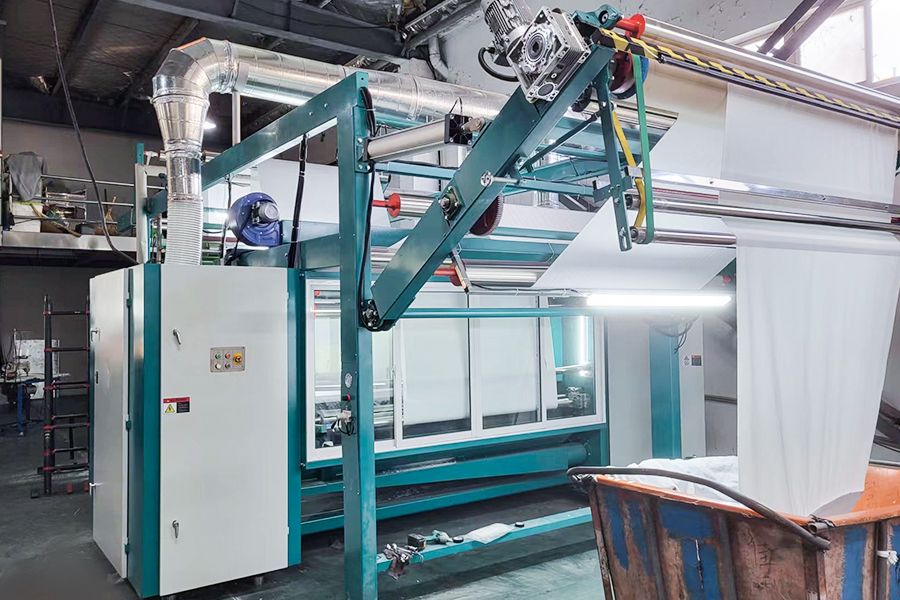
How to choose the most suitable sueding equipment for complex market demands?
What intelligent functions should modern high-efficiency sueding machines have?
The transition toward Industry 4.0 has redefined the expectations for textile machinery, shifting the focus from raw mechanical power to intelligent, data-driven performance. Modern sueding platforms are now judged by their ability to autonomously maintain quality consistency, minimize human error through advanced recipe management, and reduce the environmental footprint of the workshop through innovative energy and noise-control engineering.
-
Automatic Pressure Feedback System: Relying on high-precision laser displacement sensors or ultrasonic probes, the system can monitor the micron-level gap between the sueding roller and the fabric surface in real-time. This closed-loop control mode allows the equipment to micro-adjust based on slight changes in the fabric roll's thickness. Even when a fabric seam passes through, it can achieve nanosecond automatic avoidance, protecting the sueding rollers from damage.
-
Recipe Management System: Equipment in the Industry 4.0 era has evolved into intelligent terminals. It supports cloud storage of thousands of process parameters (including tension gradients, speed ratios of each roller, friction pressure, etc.). Operators only need to scan an order barcode to achieve "second-level variety switching," greatly reducing fabric waste and time costs incurred during traditional repeated debugging.
-
Energy Saving and Noise Reduction: The new generation of suction ducts is optimized through fluid dynamics simulation. It not only removes fiber debris quickly through high static pressure but also reduces total power consumption by more than 15%. Simultaneously, through full-machine acoustic encapsulation and anti-vibration base design, running noise is reduced below 85 decibels, significantly improving hearing protection for workers.
What long-term returns can a high-performance sueding machine bring to a factory?
Beyond immediate operational efficiency, investing in top-tier sueding technology is a strategic move to optimize a factory's Return on Investment (ROI). By digitizing traditional "craft-based" finishing, manufacturers can transition from high-volume, low-margin production to a high-precision model that significantly cuts waste and maximizes the commercial appeal of every yard of fabric processed.
-
Reduced Defect Rate: Precise digital control significantly reduces "grinding through" or "streak defects" caused by human misjudgment or mechanical fluctuations. By stabilizing pressure and tension through PLC logic, the equipment directly increases the finished product pass rate to over 99%. This reduction in rework and scrap translates into significant cost savings, ensuring that high-value raw materials are processed with maximum yield and minimal waste.
-
Increased Product Added Value: Ordinary microfiber polyester fabric, after top-tier sueding finishing, undergoes a remarkable transformation in both aesthetics and haptics. Typically, this process allows the market retail price to increase by 25% to 60%. This substantial value uplift provides a powerful technical moat, enabling factories to penetrate high-end niche markets such as premium yoga wear, luxury home upholstery, and professional-grade outdoor sports apparel where superior surface quality is a prerequisite for entry.
The Future of the Industry: Combining Sustainability with Sueding Technology
Under the increasingly strict global ESG (Environmental, Social, and Governance) standards, Textile Finishing Machines are evolving deeply toward a circular economy. The application of High-efficiency multi-stage dust filter systems is no longer just for keeping the workshop clean; it is designed to intercept more than 99.9% of PM2.5-level fiber micro-dust. These collected polyester fiber dusts can be centrally recovered and re-granulated to re-enter the spinning process. This production model of reducing waste from the source allows factories to more easily pass Global Recycled Standard (GRS) certification and secure more green orders from international brands.
FAQ: Analysis of Common User Pain Points
Q1: How to avoid sueding marks on polyester?
A: Avoiding streaks is a systematic task. Physically, you must ensure the abrasive covering on the Ceramic Roller Sueding Machine has flat seams and no local wear pits. Operationally, use the machine's automatic tension adjustment to eliminate tension jumps caused by changes in the roll diameter at the inlet. For extremely sensitive dark polyester, a "low-pressure multi-roller" process is recommended—using a larger number of rollers to disperse single-point pressure, replacing violent single friction with cumulative effects to achieve high visual purity.
Q2: What is the best machine for sportswear sueding?
A: Modern sportswear is mostly made of "polyester/nylon + spandex" knitted structures. Therefore, a Knitted Fabric Sueding Machine is the only technical choice. When selecting, ensure it features full-path Tension-free Sueding logic and confirm the rollers have an internal cooling system. This is the only way to give the fabric a "cotton-like hand feel" while protecting the moisture-wicking micropore structure and ensuring the spandex's stretch performance is not attenuated by heat.
Q3: How to handle the maintenance of sueding rollers?
A: Maintenance should follow the principle of "high-frequency micro-maintenance." After each shift, use the automatic blow-back system to thoroughly clean residual fibers. For expensive Carbon Fiber Rollers, strictly prohibit chemical cleaners containing volatile solvents to prevent bristle embrittlement. Every 500 hours of operation, a dynamic balance self-check is recommended. Additionally, maintaining constant temperature lubrication for the bearing seats is the core method to prevent uneven sueding caused by eccentric vibrations.
Q4: How to improve high speed sueding machine efficiency?
A: The essence of High speed sueding machine efficiency is the "effective working time ratio." By installing automatic edge seekers and automatic seam passage systems, non-processing downtime can be reduced by approximately 40%. Meanwhile, choosing high-end abrasives with self-sharpening properties can extend the interval between abrasive changes by more than 30%. Using PLC-based predictive maintenance to warn before abrasive life is exhausted transforms "accidental repair" into "planned maintenance."