
 简体中文
简体中文 English
 عربى
عربى



In today’s global home textile market, consumer demand has shifted from simple durability to an extreme tactile experience combined with eco-friendly attributes. As a leading Textile Softening Machine, the Air Flow Machine is leveraging its revolutionary aerodynamic technology to redefine the post-finishing standards for high-end fabrics. It not only enhances the added value of the products but also solves the environmental burden brought by traditional chemical finishing.
What is a Sofa Fabric Air Flow Machine, and why has it become a "standard" for home textile enterprises?
The emergence of airflow technology marks a transition from heavy chemical dependence to precision mechanical engineering in textile finishing. For modern home textile manufacturers, the Sofa Fabric Air Flow Machine is no longer an optional upgrade but a core strategic asset that balances high-quality hand-feel with sustainable production requirements.
What is the technical principle of Air Flow Finishing?
The efficiency of airflow finishing is rooted in the sophisticated manipulation of high-velocity air currents to interact with fabric fibers at a near-microscopic level. By understanding the complex mechanical dynamics and the Venturi effect within the machine, manufacturers can optimize soft-touch results, ensuring that fibers are thoroughly opened and loosened without compromising the underlying structural integrity or tensile strength of the material.
-
Physical Stretching and Opening: The core of this advanced Sofa Fabric Air Flow Machine lies in its aerodynamic circulation system. The equipment utilizes high-pressure fans to drive airflow through a precision-designed Venturi tube, instantly generating supersonic shockwaves. Driven by the powerful airflow, the fabric remains in a tension-free suspended state within a specialized stainless steel channel. Through periodic high-speed beating and folding movements, this Physical softening process for home textiles (physical softening) can break down the hydrogen bond combinations between fibers at a microscopic level, allowing tight organizational structures to relax completely.
-
Chemical-free Softening: Unlike traditional processes that rely heavily on softeners and silicone oils, this is a typical Chemical-free fabric finishing machine (no chemical treatment). It releases fiber elasticity through powerful mechanical energy, avoiding skin allergies or fabric "yellowing" issues caused by chemical additives. This pure physical finishing method not only aligns with the current "Great Health" consumption trend but also preserves the most original, natural vitality and luster of the fibers.
-
Applicable Fabric Range: This Air Flow Machine for Home Textiles demonstrates extremely wide process inclusivity. Whether it is heavy Sofa Fabric, thick blackout curtain cloth, or pressure-sensitive microfiber velvet and velour, the machine can achieve a lightweight, cloud-like, and elastic finishing effect by accurately adjusting the air volume and temperature.
Comparison: Air Flow Finishing vs. Traditional Finishing
To better understand the advantages of modern technology, the following table compares the key performance indicators between the Air Flow Tumbler Dryer and traditional chemical/mechanical finishing methods:
|
Feature |
Air Flow Machine Finishing |
Traditional Finishing Methods |
|---|---|---|
|
Primary Principle |
High-velocity aerodynamic impact & Venturi effect |
Heavy chemical softeners & high-tension drying |
|
Hand-feel Result |
Natural, bulky, and permanent elasticity |
Artificial smoothness, prone to "greasy" feel |
|
Chemical Usage |
Minimal to zero (Chemical-free process) |
High reliance on silicone oils and surfactants |
|
Fabric Structure |
Fibers are physically opened and loosened |
Fibers are often flattened or coated |
|
Water Consumption |
Extremely low (Waterless Technology) |
High consumption due to multiple rinsing cycles |
|
Energy Efficiency |
High (Heat recovery & air recycling) |
Low (Significant heat loss in open systems) |
|
Production Speed |
High capacity with continuous processing |
Often batch-limited or slow due to drying time |
What pain points of traditional finishing processes can the Air Flow Machine solve?
Traditional wet finishing often leaves fabrics with residual stresses, oily residues, and chemical odors, which significantly limit the sensory appeal of premium sofa fabrics. By utilizing the Fabric Air Flow Finishing Machine, manufacturers can systematically eliminate structural stiffness, reduce batch-to-batch variation, and optimize resource consumption, turning historical production bottlenecks into modern competitive advantages.
How to effectively solve the "pilling" and "hard hand-feel" problems of sofa fabrics?
Addressing the physical discomfort and surface imperfections associated with raw upholstery fabrics requires a deep focus on fiber relaxation and surface optimization. This technology provides a targeted, high-intensity solution to enhance the perceived quality of textiles by refining the hand-feel through non-invasive mechanical means, effectively removing the "crunchy" or "scratchy" texture common in heavy-duty home textiles.
-
Elimination of Internal Stress: After high-tension processes such as spinning, weaving, and dyeing, internal stress accumulates within the fibers, resulting in a stiff hand-feel and easy wrinkling in the finished product. As an efficient Sofa fabric hand-feel improvement machine (hand-feel enhancement), it performs deep "massages" on the fabric through thousands of physical beats per minute, thoroughly releasing residual stress. This not only improves the hand-feel but also greatly enhances the dimensional stability of the fabric, preventing severe shrinkage and deformation during subsequent washing or use.
-
Enhancing Fabric Bulkiness: During the processing, the airflow allows every single fiber to be fully extended and expanded, giving the fabric an excellent Bulky effect. This treatment significantly increases the thickness and drape of the fabric. Even ordinary polyester fabrics can present a rich texture and high-grade visual effect similar to high-end natural fibers after airflow finishing, directly improving the premium pricing capability of the end products.
How does the Air Flow Machine achieve energy saving and emission reduction in today’s rising energy costs?
Environmental sustainability is now inextricably linked to the financial viability of textile mills, making energy efficiency a critical factor in machinery selection. Modern airflow systems are engineered to minimize heat loss, maximize air recycling, and drastically reduce water usage, offering a significantly greener footprint for the high-intensity finishing industry while slashing operational overheads.
-
Low Liquor Ratio Circulation: During the operation of the Fabric Air Flow Finishing Machine, because it is no longer necessary to completely submerge the fabric in water, the liquor ratio can be reduced to an extremely low level. This means that water consumption, chemical usage, and subsequent sewage treatment pressure in the production process are all significantly reduced. Compared to traditional overflow equipment, this energy-saving mode saves huge resource costs for enterprises.
-
Heat Recovery Technology: This Energy saving air flow machine for sofa fabric (energy saving) equipment is usually equipped with an advanced intelligent thermal energy circulation and recovery system. It can filter and heat-exchange the high-temperature waste gas generated during the drying process and reintroduce it into the air inlet, thereby increasing thermal efficiency by more than 30%. This closed-loop design not only reduces carbon emissions but also directly optimizes the profit margin of enterprises in today's era of high energy costs.
How to improve the market competitiveness of sofa fabrics through an Air Flow Machine?
In an era of extreme market homogenization, differentiation through superior texture, unique visual effects, and verified sustainability has become the primary driver for global brand growth. Integrating an Air Flow Tumbler Dryer into the production line allows companies to offer unique aesthetic finishes and eco-certified products that resonate deeply with the values of modern, quality-conscious, and eco-conscious consumers.
Why is "Functional Home Textile" inseparable from airflow finishing technology?
The functionality of modern home textiles now extends far beyond basic aesthetics to include vital comfort factors like high air permeability, moisture management, and skin-friendly textures. Airflow finishing plays a pivotal role in engineering these functional characteristics by physically altering the fabric's porosity and micro-surface, creating a breathable environment that enhances the living experience.
-
Breathability Enhancement: The impact of strong airflow not only changes the fiber arrangement but also creates subtle and uniform gaps between the fibers. This significantly improves the air permeability and moisture permeability of the sofa fabric, fundamentally solving the "stuffy" pain point of heavy fabrics and greatly enhancing the comfort and skin-friendliness for consumers sitting for long periods.
-
Creation of Special Textures: The airflow machine is not just a softening tool, but also a creative one. Through precise programmable adjustment of airflow frequency and beating intensity, enterprises can create natural visual effects such as "washed texture," "vintage wrinkle," or "frosted feel" on the fabric surface. Combined with a Continuous air flow softening machine (continuous type) production line, the standardized and large-scale production of these high-end customized styles can be achieved, helping brands stand out in a highly homogenized market.
How does the Air Flow Machine help enterprises obtain a "Green Pass" under global ESG standards?
Meeting the rigorous requirements of Environmental, Social, and Governance (ESG) criteria is no longer optional for modern textile exporters. By adopting airflow technology, manufacturers can significantly reduce their chemical footprints and wastewater toxicities, thereby qualifying for the world's most recognized environmental labels and gaining access to premium, high-standard international retail chains.
-
Reduction of Chemical Pollution: This technology greatly reduces reliance on synthetic silicone oils and various emulsifiers, not only reducing raw material expenses but also enabling products to pass strict international ecological safety certifications such as OEKO-TEX Standard 100. For home textile export enterprises aiming to expand into high-standard markets like Europe and North America, this is undoubtedly an important bargaining chip for entering the high-end supply chain.
How to choose a high-performance Home Textiles Air Flow Machine?
Selecting the right equipment requires a deep understanding of the synergy between heavy-duty mechanical precision and high-speed digital control. A high-quality Textile Softening Machine should offer a robust, vibration-resistant physical build coupled with an intelligent, user-friendly operating system to ensure long-term reliability and perfect batch-to-batch consistency in the demanding world of Upholstery Fabric Processing.
What are the key technical indicators?
When evaluating high-end finishing machinery, technical specifications provide the essential blueprint for expected performance, energy efficiency, and long-term durability. Focus should be placed on the core components that handle high-velocity airflow, the precision of the variable frequency drives, and the materials used in the impact zones where the fabric undergoes constant mechanical stress.
-
Fan Efficiency and Frequency Conversion Control: As the heart of the Air Flow Tumbler Dryer, the design of the fan directly determines the pressure distribution of the airflow. High-performance equipment is usually equipped with large-volume centrifugal fans and precise frequency conversion drive systems to ensure that even when processing ultra-wide or ultra-heavy fabrics, the airflow remains constant and stable, avoiding uneven finishing or color differences.
-
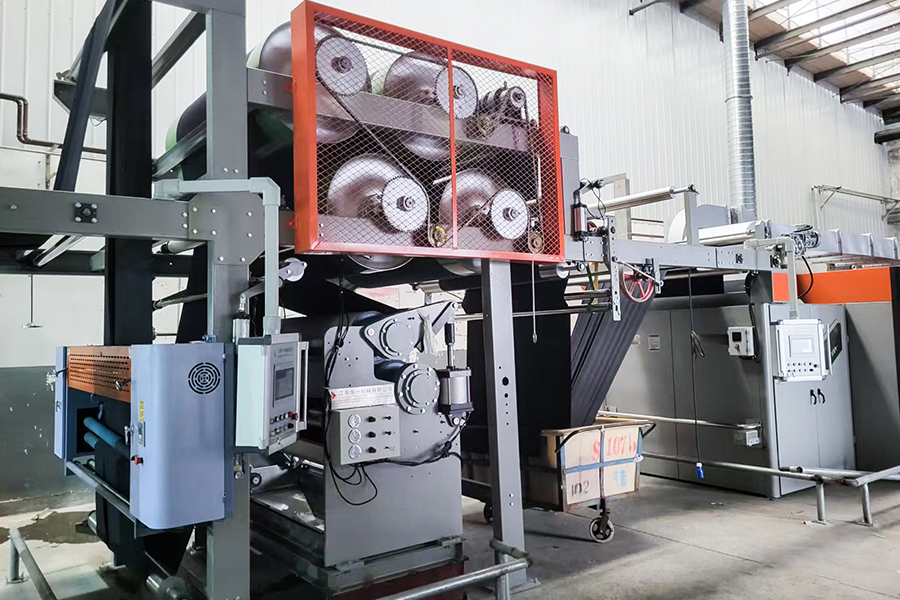
Internal Chamber Material and Teflon Coating: Long-term high temperature and high-frequency friction are severe tests for the machine's inner chamber. High-quality equipment usually uses 316L industrial stainless steel and is sprayed with high-performance Teflon (PTFE) coating. This ensures that when performing Upholstery Fabric Processing (upholstery processing), the fabric surface will not suffer from any physical scratches, snagging, or static accumulation.
What role does the intelligent control system play in modern Air Flow Machines?
Automation and real-time digital oversight have transformed the textile finishing floor into a high-precision manufacturing environment. Advanced intelligent control systems ensure that complex finishing processes are repeatable, scalable, and transparent, allowing for precise tracking of production metrics across different shifts, fabrics, and production sites.
-
One-touch Process Parameter Recall: Modern airflow machines are equipped with industrial-grade PLCs and touchscreen interfaces. For pure cotton, polyester, linen, nylon, and various complex blended fabrics, the system can store hundreds of mature process formulas. Operators only need to select the corresponding variety, and the machine automatically sets the wind speed, temperature, and time, ensuring that different batches of fabric achieve laboratory-level consistency.
-
Remote Monitoring and Fault Warning: Intelligent Textile Finishing Machinery (finishing machinery) has now been integrated into the Industrial Internet of Things (IIoT). Managers can monitor the operating efficiency and energy consumption fluctuations of multiple devices in real-time via mobile phones or computers, and replace consumables in advance based on the system's preventive maintenance suggestions, truly achieving the leap from "manufacturing" to "intelligent manufacturing."
Frequently Asked Questions (FAQ)
Q1: In the field of Textile Finishing Machinery, what is the main difference between an Air Flow Softening Machine and a traditional dryer? A1: An airflow machine is by no means a simple drying tool. Although both involve thermal energy, the core of the airflow machine lies in "finishing." It uses the Venturi effect to accelerate airflow and generate huge mechanical impact force, acting as a Fabric Bulking Machine (bulking machine). While a regular dryer only removes moisture, an airflow machine fundamentally changes the physical structure of the fabric, giving it a silky, bulky, and elastic high-end hand-feel.
Q2: Why is Upholstery Fabric Processing increasingly favoring this technology? A2: Upholstery fabrics (such as sofa fabrics and engineering wall cloths) are usually high-density or very heavy, making it difficult for traditional brushing or chemical washing to reach deep into the fibers. Airflow finishing, with its powerful penetration, can deeply open the core of the fibers without damaging the warp and weft strength, significantly improving bulkiness and touch.
Q3: How does this equipment integrate into overall Dyeing and Finishing Solutions? A3: It is an indispensable "finishing touch" in modern dyeing and finishing processes. After the fabric completes dyeing, printing, and preliminary setting, entering the airflow machine for final relaxation finishing can eliminate all stiffness and creases generated by previous processes. As the terminal link of an efficient process, it is key to ensuring that the finished product meets "export inspection-free" quality.
Q4: How is Waterless Finishing Technology reflected in this equipment? A4: This equipment represents the industry's transition toward dry finishing. It uses high-speed circulating air as a carrier to transmit energy, replacing the softening tasks that traditional processes require tons of water to complete. This quasi-waterless processing logic greatly reduces sewage discharge and treatment costs, making it a technical tool for home textile enterprises to achieve carbon peak and carbon neutrality goals.